
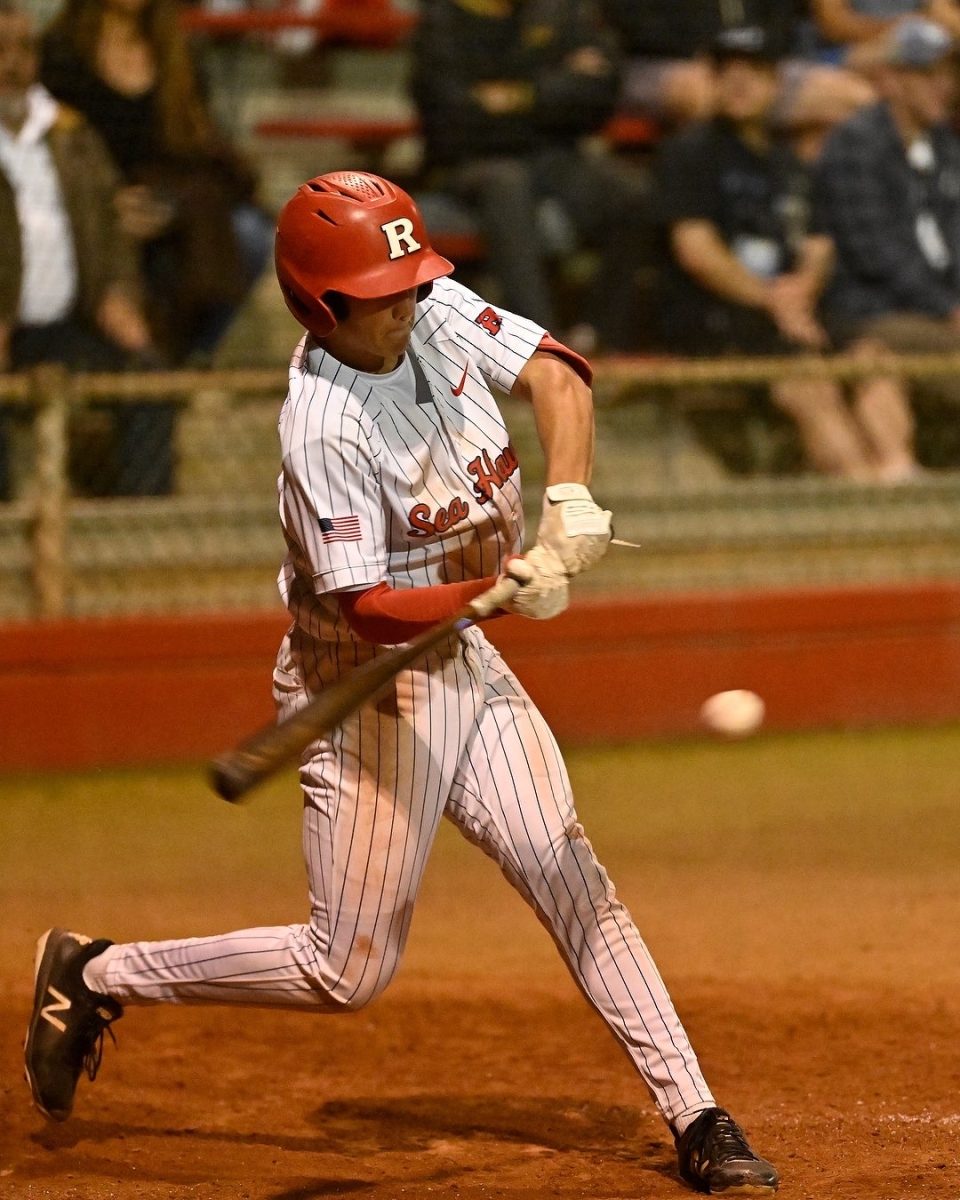
Many people believe that hard work is the key to success. For Sam Schwartz, that ideal became true after one of the hardest moments of his life. After playing baseball since he was three years old, not making the high school team as a freshman was “devastating.”
“[Not making the team] really sucked, and hurt a lot,” Schwartz said. “It taught me not to expect things to be given to you. You have to work for things no matter what the case is, whether it’s sports or academics. That was an important lesson baseball gave me.”
After getting cut from the baseball team, Schwartz “took a step away from everything.” He then skipped the next day of school to “angrily hit golf balls” with his dad, Schwartz made the decision to ask the coach how he could improve. He learned that the main reason he didn’t make the team was due to his size, so he began focusing on getting bigger in the gym to earn a spot on the team as a sophomore.
“I never really felt good enough until I made the team the next year,” Schwartz said. “I also had a huge growth spurt, which helped. Looking back, constantly thinking I wasn’t good enough probably didn’t help, and it still affects me sometimes.”
According to Schwartz, this experience created a mindset to work harder, which eventually led to him becoming a starting player on Junior Varsity.
“Mentally, I definitely went through a rough patch,” Schwartz said. “School was great, but when I got home, I felt like I always needed to improve. Even after making the team, people still told me I’d probably just be a backup. I went 100% everyday in practice trying to improve myself, and it was exhausting.”
Schwartz’s close friend Keijiro Hatori witnessed his shift in mindset after freshman year. According to Hatori, having known Schwartz since kindergarten allowed him to see the change Schwartz made in his relationship with baseball altogether.
“Even before [Schwartz didn’t make the team], he was working so hard,” Hatori said. “I would see it in practice every single day, no matter the conditions. But there was just a flick of something in him that suddenly said ‘I need to prove everyone wrong.’”
According to Schwartz, he has always been open to making changes and improving his skills in every area. During COVID, Schwartz struggled in school; however, he took a chance on the journalism program in high school even though English was not his strongest subject.
“In eighth grade, I had a really nice teacher who believed in me, and he was a great mentor to have,” Schwartz said. “When he recommended me for the journalism program, my parents were shocked because they had never really seen me do well in that part of my life. I took the opportunity, and when I came into journalism, the people were super inviting.”
According to Schwartz, the journalism program introduced him to many diverse personalities and ideas that he had not been exposed to before. Schwartz described himself as a shy person, but joining the High Tide changed the way he viewed his friendships.
“Both journalism and baseball taught me that you can respect anybody,” Schwartz said. “In journalism, you can interview all kinds of people with different hobbies and realize they’re not too different from you. In baseball, everybody has their own personality and different groups they hang out with. Both experiences showed me who they are. Even if you’re competing against someone from the lineup, you should still treat them with respect.”
As Schwartz became extremely focused on baseball, according to Hatori, Schwartz also became a person the team often relied on. Hatori noticed more maturity and leadership in his friend as they got older.
“He cares for every single one of us, and he’s there for us whenever we need him,” Hatori said. “He’s able to think about other people and support everyone else, even when he’s going through a lot of things. He’s always checking up on us and supporting us in the ways we need him.”
Schwartz is continuing his baseball career at Bethany College, carrying the lessons learned from his setbacks and his experiences. According to Schwartz, the difficulties in his freshman year pushed him harder and changed the way he views challenges.
“You’re going to face rejection no matter what,” Sam said. “You just have to find a way to rebound from it.”