

Peptide Pandemonium


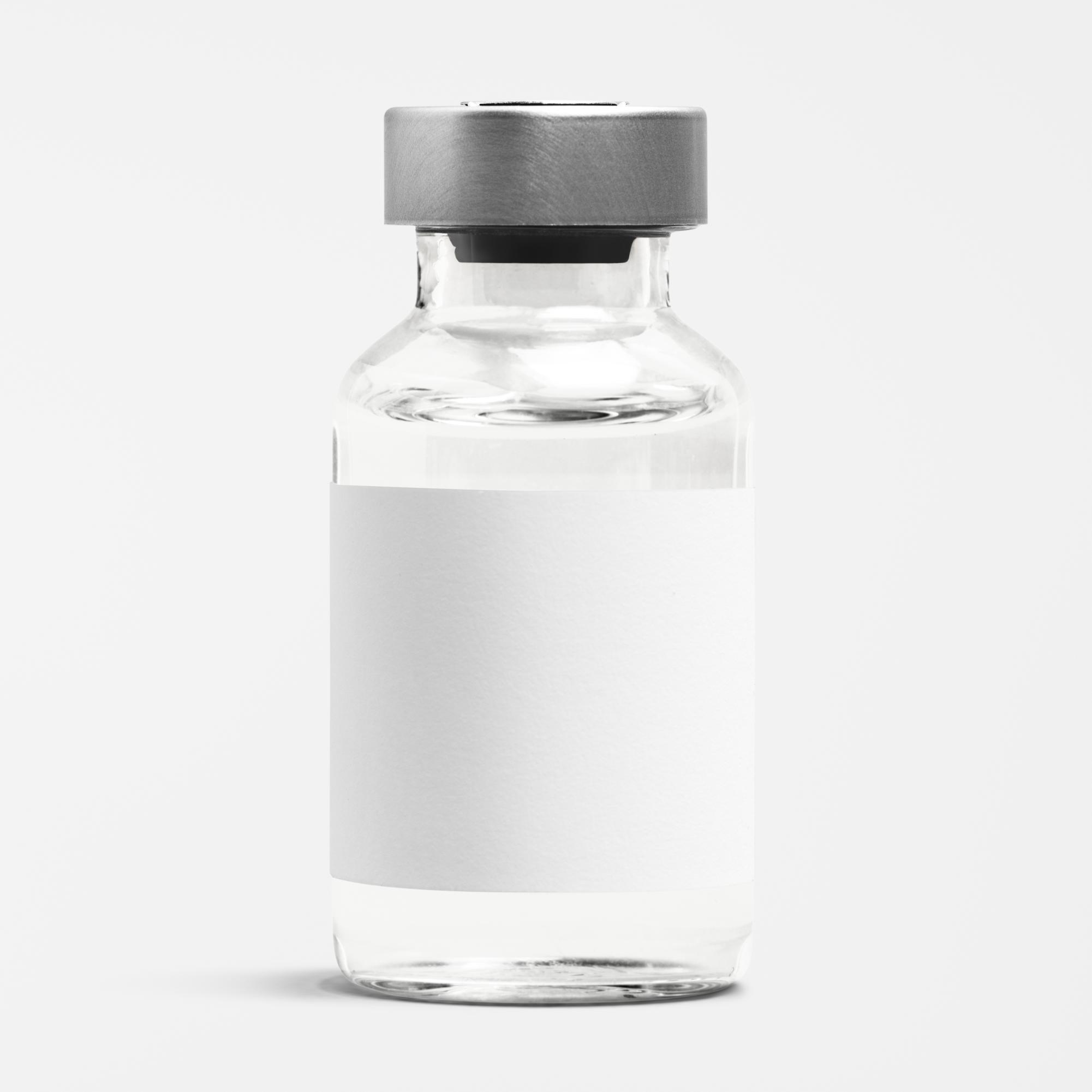
Opening his front door, anonymous junior Ben signs for a package and takes it inside. Unboxing it reveals powdered skincare products. Later that day, he rolls out a clean washcloth and sets down the powder, bacteriostatic water and a syringe. Swabbing everything down with alcohol, Ben carefully measures out the powder and water and mixes them together, stirring out every clump. After disinfecting his skin, he fills the syringe and injects the mixture into himself. He then places the needle in a bag, drives to a random dumpster and tosses it in.
Although it arrived packaged as face masks, the powder is actually a human growth hormone (HGH) compound. Ben is just one of many high schoolers to partake in the recent peptide trend, popularized in part by social media influencers and the ‘looksmaxxing’ online subculture, which seeks to improve one’s own physical appearance, often through extreme methods.
“I’ve known about HGH for a very long time,” Ben said. “In sophomore year, I got more familiar with the whole looksmaxxing thing. It was any way to make yourself look better, taller and more muscular. I saw HGH again, and for me, I saw a compound that could make me taller. I wanted to get taller for sports because it’s easier to get recruited, you perform better and you’re stronger. I did my research. I knew the risks. I found my source, and just went through with it.”
HGH is a type of peptide hormone, commonly referenced online as peptides, which are forms of protein produced by the body to serve specific purposes like signaling certain parts of the body to perform a task. They can be synthesized by mimicking their amino acid sequences, and administered orally, topically or through injection, according to Professor of Pharmacy at the University of Washington Lingtak-Neander Chan.
“I can see how this is being manipulated by claiming [peptides] are natural because they are what your body already makes,” Chan said. “I can also see this manipulation of the message becoming dangerous because the body is already in a balanced state. By changing that balance without identifying whether there is a problem, you’re sending a message to the body to do something the body is not planning on doing. That can lead to a lot of short term and long term complications. My worries are twofold. In a short term, something can go wrong from contamination, from impurities or from the doses. In the long run, your body can experience some changes over time that don’t show the impact until years later. By then, there is nothing that can change it back.”
For Ben, long term concerns were a risk he was “willing to take,” incentivized by his goals as a student athlete. Peptide hormones and growth factors are considered a banned substance by the NCAA and sporting regulatory bodies in general, but the California Interscholastic Federation (CIF) does not test high school athletes for performance enhancing drugs (PEDs), a loophole that Ben testifies enables steroid and peptide use amongst “big athletes” at RUHS.
“Why not just hop on steroids, get your Division One offer, hop off, show up to the school, and they’ll take care of you from there?” Ben said. “Even if you’re not even that good of an athlete, you hop on steroids, and you’re putting up crazy numbers in the weight room. Then you’re going to the field, the mat, or whatever sport you do, and you’re gonna do pretty well, even if you’re not that talented or athletic. As long as you’re strong, you’re probably gonna do better than 70% of people.”
With hundreds of thousands in athletic scholarships and collegiate opportunities on the line, Ben recalls feeling the need to “step up” in order to compete against kids who were held back from entering high school by a year in order to grow taller and stronger, a process known as reclassing or red-shirting. Taking HGH was Ben’s way to “cut the gap.” In the three months of daily injections that he took, Ben grew half an inch and gained 20 pounds.
“Honestly, I live by the thought process of ‘He won. You lost,’” Ben said. “It doesn’t matter how he got there. If you are willing to take the risks, and you’re willing to do what needs to be done to get where you want to be, you’re the winner. Even if you get caught doping, if you ain’t cheating, you ain’t trying. You gotta do what you gotta do.”
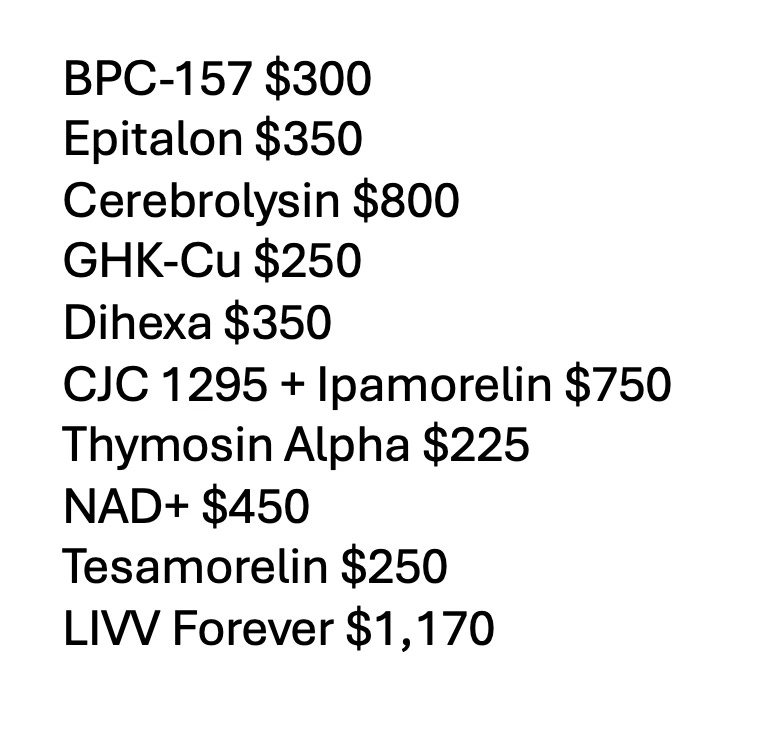
Without his parents’ knowledge, Ben got a job, sold personal belongings and organized discounted group orders with his friends in order to afford the shipments, which cost around 100 dollars for a month’s supply. His source, which he contacts through a WhatsApp number given to him by his friend, is a Chinese manufacturer that sells an array of substances. Imports of hormone and peptide compounds from China reached $328 million in the first three quarters of 2025, according to U.S. Customs Data. In fact, the true reason Ben came off HGH after just three months is because his shipments were paused due to the factory’s month-long break for the Lunar New Year. Anonymous senior Ethan, who purchased a batch of retatrutide from a vendor on Instagram, says these compounds are “incredibly easy” to buy. Websites like eternalpeptides.com sell over 20 different types of peptides as research chemicals not intended for human use; in October The Guardian investigated TikTok accounts instructing viewers to message them privately for links to buy peptides.
“All the looksmaxxers on social media are pushing [peptides] like crazy. Their audience is all super young and can be influenced really easily,” Ethan said. “I don’t know if people realize this, but a lot of these guys on TikTok that are all shredded and saying to take this are getting paid by those companies. They want you to take this stuff. They don’t tell you that this is a research grade product or that there’s these consequences. They’re just telling you what you want to hear so you purchase the product using their link or using their code, so they get money for it. At the end of day, they just want to make a profit.”
Online misinformation is “driving the trend,” according to Chan. While Ben and Ethan both conducted their own research and continue to follow studies done on peptides, Ben alleges that other people in his group order “just don’t understand” what they are buying.
“Doing research is super important because you’re putting something in your body,” Ethan said. “You should know every single thing about it. If you’re gonna go blind into something, you’re just not thinking. You’re injecting something into your body, and it can have major consequences on your health. You should know what you’re doing, and I would say right now most people do, but it’s definitely changing because younger audiences want to get on it, and everyone’s talking about it. I know for a fact there’s gonna be someone in the future that does something that they’re not supposed to do, and it ends in someone getting hurt.”
Many peptides have had limited studies done on humans or are still undergoing testing. Most are not FDA approved. Ethan takes retatrutide, or reta, which is a weekly injection developed by Eli Lilly that is currently undergoing Phase 3 clinical trials for treatment of obesity, type two diabetes and arthritis. It is a triple agonist, meaning it targets GLP-1, GIP and glucagon receptors. According to the Lilly website, retatrutide is not legally available outside of the clinical trials, and “no one should consider taking anything claiming to be retatrutide.” In Phase 3 trial results released in March, participants taking 12 milligram doses lost nearly 17% of their body weight in 40 weeks from an average baseline of 213.6 pounds.
“I would not think that a lot of teenagers are in that weight range, and for those who are in that weight range, I hope they have medical care, and they seek healthcare providers to support their weight loss,” Chan said. “When you do lose 15 to 20% of your body weight, you would lose fat and you would lose muscle. Losing muscle is a big concern because your muscle serves as a reserve for some micronutrients. It also serves as important for your day to day. When you don’t have enough muscle, you’re going to get fatigued really fast, and you are not going to have endurance. This is especially critical when you’re still growing. If you want to participate in sports, [losing muscle is] contradictory to what you try to accomplish. In the long term, a substantial decrease in food intake puts a person at risk of what we call micronutrient deficiencies. We don’t need a whole lot on a day to day basis, but when you eat less food, you’re going to receive less of these micronutrients, and over time, you will develop a deficit. That can lead to complications ranging from bone pain, muscle pain, not enough blood count or anemia, and in the most severe cases, it can lead to blindness.”
Although he was not overweight, Ethan decided to start taking retatrutide to help him speed up the process of body recomposition as a weightlifter that trains six times a week. With his parents’ knowledge, he bought an eight week clinical-grade supply and now increases his dose by half a milligram each week. He plans to reach a maximum dose of 4.5 milligrams. At five weeks, he reported having “a hard time eating” and averaging 1,200 calories a day, down from a level of 2,000 during his typical cut.
“Food won’t even be on my mind,” Ethan said. “You’ll go through the entire day and realize that you barely ate today. You’ll drink water and you feel full really fast. I’ll have to force myself to eat at night sometimes. Another thing is that reta makes your metabolism slower, so, in turn, it makes you tired. I noticed I was prone to napping more and it was harder to be productive. I’ll be doing homework, and I notice myself scrolling more because I want something that’s just low effort to do. That makes me rely on caffeine more. I’ll be drinking more energy drinks because I’m trying to stay awake. But, when it comes to working out, I’ll feel my best when I work out. I’m able to lose weight without losing muscle, so I’ll look better in the gym, and I’ll feel better.”
Based on his experience, Ethan believes retatrutide is “the future” because of its advanced effectiveness compared to GLP-1 medications like Ozempic, and that it is “the safest peptide” available. Once he stops taking it, the appetite suppression will wear off quickly.
“You’re gonna be eating a lot, and so you might gain that weight back and feel like you have to take it again,” Ethan said. “You’re also unhappier with your body because you saw it at its peak, and now you want to get back there. You might want to keep doing it, but I think I’m disciplined enough to the point where I can just control myself. […] I can see how people get addicted to the feeling of getting leaner. With losing weight, especially for people who are really overweight, they gain so much from it, whether it’s attention or status. The trade-off of not being on [medication] and just getting bigger is not worth it, so they’d rather just be on it.”
Overall, it seems that the social importance of personal appearance fuels this trend, even if some individuals do choose to take peptides to improve athletic performance or lift heavier in the gym. Other popular compounds include GHK-Cu, promoted to improve skin health, or Melanotan II, which causes a synthetic tan.
“I think looksmaxxing and bodybuilding on social media are the biggest reasons people are getting into peptides or performance enhancement,” Ben said. “A lot of it goes hand in hand. All the big people online who are known for looksmaxxing live that millionaire lifestyle. They have girls all over them, they’re driving nice cars, they’re famous and they get whatever they want. Why wouldn’t you want to have that too just because you look good? I think that’s really what drives people to take these things. I do know a good amount of people who do take peptides just to look better. It works. It really is like a miracle drug, but who knows how it’s gonna affect their body 20 or 30 years down the line?”
Because of peptides’ continuous growth in popularity, Ethan believes they will be “normalized” in the future. Ben has seen kids starting to go on them at a younger age. Chan encourages teenagers to equate peptides with prescription drugs and to administer them only under medical supervision.
“For people who aspire to have increased athletic performance, there are safe ways to meet those goals, and that would include working with a certified trainer, working with dietitians and working with certified professionals to monitor the type of activities, your nutritional intake and your overall health,” Chan said. “Of course, that is not to downplay the importance of the mental health aspects of it. Let us make sure not to have the physical look become the primary driving force of your well being.”
Neon eyeshadow, hot-pink lipstick and fluffy, teased hair were a few of the prevailing beauty trends that defined the 1980s. In the 1990s, it was thin eyebrows and matte makeup, and in the early 2000s, side parts and frosty eyeshadow were all the rage. Those trends were incredibly popular in their respective eras, but as all trends do, they eventually began to lose traction as another style moved into the spotlight and captured the public’s attention.
According to Maryville University, when social media first became prevalent in the 2000s, its purpose was to bridge geographic gaps and facilitate connection between friends. However, as it grew in popularity and more social media platforms were created, it also became known as an outlet for “influencers,” who are “individuals with a dedicated following on platforms like Instagram, TikTok, or YouTube, who hold the power to sway their audience’s purchasing decisions or opinions due to their perceived expertise, authenticity, or authority in a specific niche” (ResearchGate). Junior Annabelle Langston has noticed that influencers are one of the biggest reasons for the creation of beauty trends today.
“Since social media is something so many people spend so much of their time on, it makes sense that trends start there. Millions of people can view a new [fashion] style or makeup style at once, and then it catches on with all those people, which makes it a trend. But I also think the content people are viewing on those social media apps makes a big impact too, because when people notice that a popular influencer with millions of followers is dressing a certain way or using a certain product, they are influenced to buy it too.,” Langston said.
While social media plays a massive part in beauty trends and culture today, it was not always the case. Langston’s mother, Susan Langston, watched beauty trends spread in different ways in the late 20th century and early 2000s, before social media was as prevalent.
“When I was [younger], the biggest thing was magazines and newspapers. There are a lot of fashion magazines I remember seeing as a kid and hearing about that had a big impact on how people wanted to appear physically. Magazines also made people want to do their makeup in certain ways and would give tips on that kind of thing, and then those techniques would catch on, and you could call that a “trend” itself. In the 90s we were also influenced by celebrities and music videos and TV shows,” Susan Langston said.
Following this era, the role of creating and expanding beauty trends began to transfer to social media. Some of the first trends grown this way were DIY fashion hacks and the popularization of specific hair colors in the early 2000s. In the 2010s, social media helped popularize a makeup look that involved dramatic features like bold eyebrows and full-coverage, matte foundation. In the 2020s, this underwent a massive shift with the adoption of “clean girl makeup,” which instead emphasizes “minimalism and a fresh, natural look,” according to Beauty Base.
“Anyone who’s been on TikTok from 2020 to now has seen how popular [clean-girl makeup] is. It’s interesting to compare that to makeup you’d probably see in the 2010s because it really wasn’t that long ago, but it’s so different from what was super popular only four or five years later. I think social media played a big part in how dramatic that change was because of how if even one person did that look, social media makes it so easy for it to catch on with a ton of people,” Langston said.
While social media is a catalyst, the quick turnaround between beauty trends has been prevalent for decades. However, this fluctuation in the popularity of trends on social media extends far beyond makeup and fashion. The idea of changing “beauty trends” also encompasses how different body types have been considered to go in and out of “fashion” depending on the decade: the 90s and 2000s focused on extreme thinness, the 2010s emphasized a “slim-thick,” hourglass or “curvy-fit” look, and the 2020s are now considered to almost be a blend of both. Social media accelerates this phenomenon because it involves people promoting the “popular” body type of the era, which can lead to the idealization of that build.
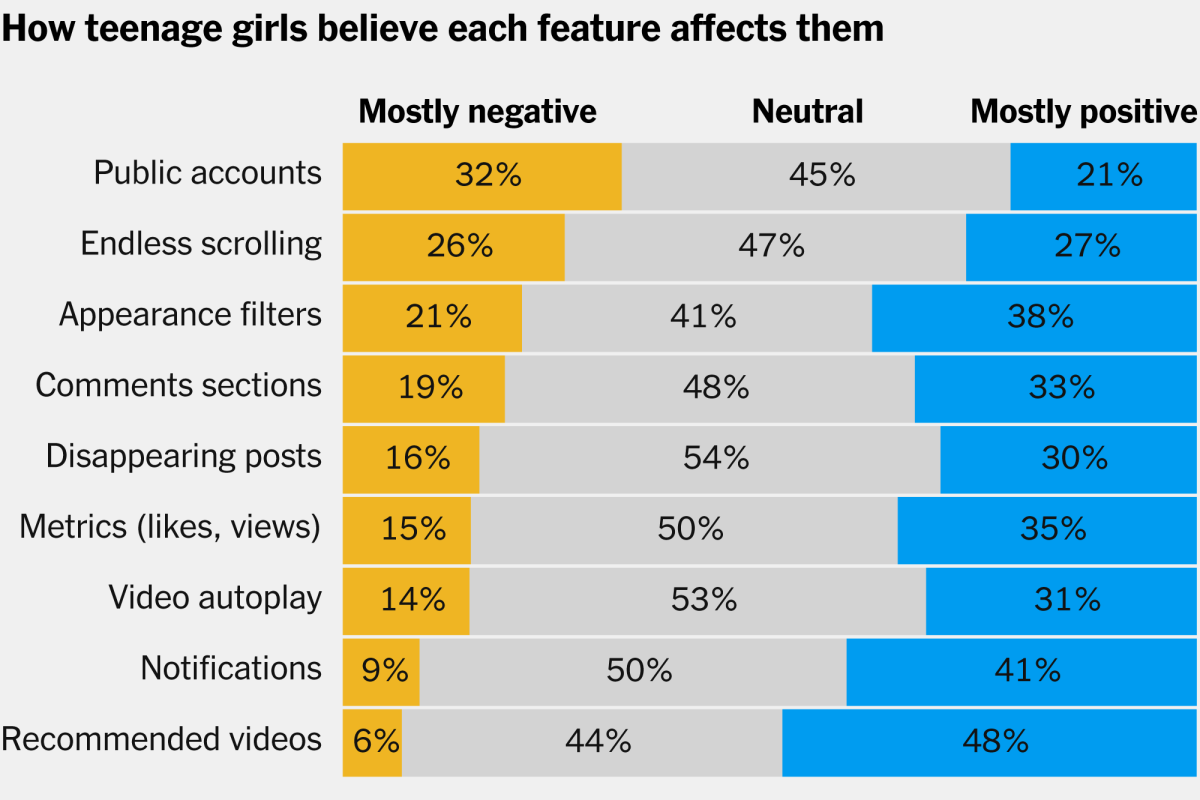
“Since I’ve seen social media grow and change since it first got popular, I have seen how a lot of different body types will go in and out of popularity as years go by. Since social media popularizes each of these types and makes it “better” or “cool,” it means that a lot more people are trying to achieve that build. Then, since it changes so frequently, it means people are constantly changing themselves, sometimes in unhealthy ways, to look that certain way. This has probably been so damaging to a lot of people, especially young girls, who are more receptive to that kind of thing a lot of the time,” Susan Langston said.
In addition to it being detrimental towards a person’s mental health to try to constantly adhere to new beauty trends popularized by social media, it also leads to the consumption of more products over time. According to Statista, platforms like TikTok and Instagram have driven around 46% of U.S. consumers to spend more on beauty products than they would have otherwise.
“[Consumerism] is really visible on social media, but you can also see it in the people around you. In terms of beauty trends specifically, what I see happen is that an influencer will make a new makeup product or brand super popular, and then everyone is running to buy it, even if they already have products that do the exact same thing. It becomes all about having the brand name and having what’s popular at the moment, and people are buying things they don’t need because of how social media has a new trendy item constantly. A month after, a new product will get popular, and the same thing will happen as people forget about the last thing,” Langston said.
Overall, constantly trying to adhere to new beauty trends on social media has negative impacts on several aspects of peoples’ lives, most notably, their wellbeing, mental health and the economy. As beauty trends have changed on social media, pressure to stick to them has increased, which has contributed to an overall more toxic environment.
“People shouldn’t try to pressure themselves into following certain beauty trends, because they’re very likely to go out of style soon after. The currently trending body type or makeup style that is popular now, will be entirely opposite and backwards five years from now. The things that are desirable and cool and that people want now, could be exactly the opposite of what people are trying to achieve five years from now,” Susan Langston said. “Even with products, they all get less popular and then popular again and it repeats over and over. So don’t pressure yourself into fitting into that mold because chances are in a few years, the mold could look entirely different.”
While scrolling through social media, you have probably seen people with thousands of followers like Clavicular, who preach about peptide injections, bone-smashing and mewing to gain the desired jawline or muscles. Welcome to one of the most popular internet trends: looksmaxxing. Geared towards teenage boys and young men, it aims to achieve the peak level of attractiveness, measured by certain characteristics such as a proportional face, tall height, clear skin, strong jawline and more.
Although looksmaxxing can be used to reinstall self-confidence in teenagers, it also creates a destructive obsession over physical features that causes many to “neglect emotional intelligence and empathy,” according to sophomore Jovana Babic. In fact, looksmaxxing encourages constant comparison in appearance with peers, often referred to as mogging, which can worsen someone’s self confidence. The looksmaxxing pyramid is a prime example of comparison, organizing the hierarchy based on different levels of attractiveness. Within the looksmaxxing community, those who are deemed unattractive are described as “subhuman,” while those at the top of the hierarchy and at peak attractiveness are labeled as “Chads.”
“When people create an image of the ideal body or the ideal person in looks, it’s not really something that’s achievable,” Babic said. “It sounds insane that people would just measure themselves based on looks, but this Chad is this unachievable version of looks. They don’t even exist and yet everyone’s striving to get to that position, which leaves people unsatisfied with how they look, their bodies, and they just feel unfulfilled at the end of the day.”
Influencers such as Clavicular encourage extreme and dangerous methods in the pursuit of beauty, promoting injections to boost testosterone levels to unhealthy levels, limb lengthening surgery and bone smashing (using a blunt object to create microfractures in one’s jawline). PhD student at Dalhousie University, Nic Kuzmochka, has been working for the last two years on publishing an in-depth research article covering looksmaxxing, and notes how influencers exploit their young, self-conscious audience to further their own goals and fanbase.
“Part of looksmaxxing is the bigger problem of these parasocial relationships that are really prominent on the internet, where we’re encouraged to find people like Clavicular […] and become invested in them, believe in them and feel like they’re our friends,” Kuzmochka said. “There’s a really powerful form of influence that people like Clavicular are able to exercise through their audiences. […] They tell young men that they are worthless and they’re unattractive, so they establish this idea that you are bad and you need to be better. Then they offer them a solution on how to do that.”
Kuzmochka observes that looksmaxxing is a constant feedback loop where victims are striving for social validation for their efforts, but never receive it from the looksmaxxing community. According to the National Library of Medicine, up to 95% of teenagers at ages 13-17 report using social media, most of which are prime targets for looksmaxxing influencers. Even those who don’t take looksmaxxing seriously might feel inclined to watch ironically, according to Nate Marshall.
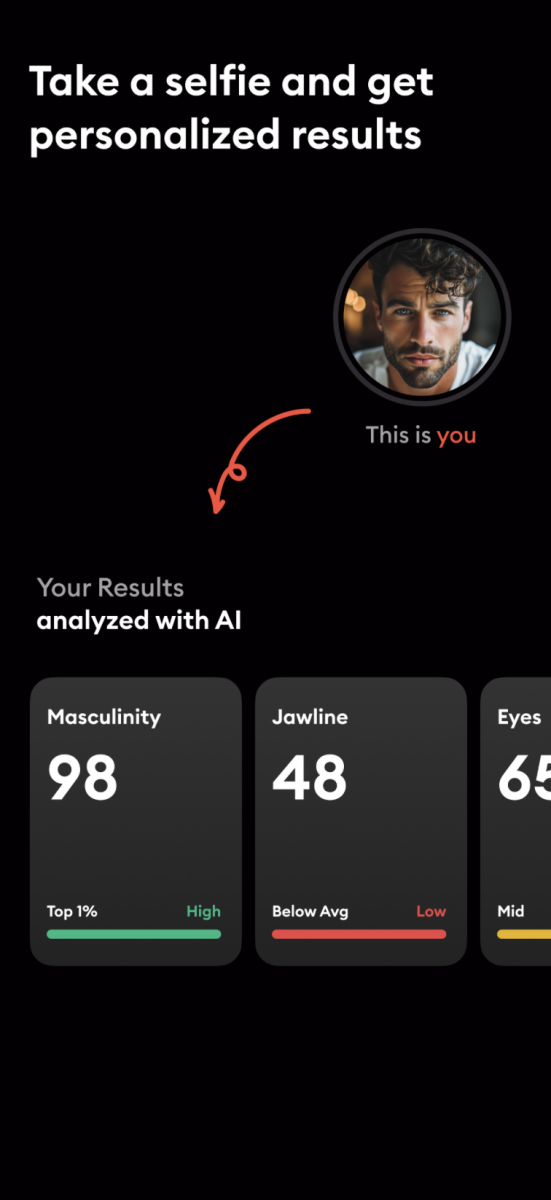
“When somebody uses negativity to grow their platform, it grows a lot faster because that drama sells a lot better than anything [positive]. I have never seen a body positivity video, but you see a lot of looksmaxxing videos because it sells more. It becomes more popular, so people are drawn to do it even if they don’t believe it,” Marshall said.
According to Kuzmochka, looksmaxxing is partially based on the idea of evolutionary psychology, where women are believed to be “hardwired by evolution to only view certain physical attributes as attractive.” Consequently, many men who believe they don’t have the necessary attractive characteristics — being tall, having a strong jawline or being muscular — often turn to looksmaxxing as a way to artificially become more attractive to women. Based on Kuzmochka, the rise of the male loneliness epidemic of socially isolated males has caused many to emphasize appearance in a relationship while neglecting to build emotionally vulnerable connections with their partners. However, Babic comments on how women pick partners on much more than just appearances, and how looksmaxxing influencers are broadcasting the wrong message to their audiences.
“It paints men and women to both be shallow and only focus on these superficial things [like appearance]. Obviously, there’s more depth to everyone. It definitely has misogynistic undertones to just perceive women as just biologically driven to only want the top contenders of men to have as partners,” Babic said. “I think it fuels a lot of hate in these young men if they don’t think that they’re top contenders. Not only do they start to hate themselves and how they look, but they also project that onto women.”
This evolutionary psychology also has its roots in eugenics, according to Kuzmochka. If women are compelled to seek out the best looking men, then what defines the top contenders? Kuzmochka suggests that groups such as incels (men who believe they are incapable of sexually attracting women) and pickup artists (men who deploy manipulative psychological tactics to seduce women) who are closely related to looksmaxxing often harbor beliefs that having a white appearance leads to increased sexual success. In fact, the majority of looksmaxxing focuses on European features as its base, such as height or fairer complexions.
“Eugenics is a big part of regulating white supremacy. It’s this idea that you should be controlling people such that they engage in the optimal pairings to produce the best children, and to looksmaxxers, the best children are also the most attractive children,” Kuzmochka said. “This idea that people develop in the best way and they do that through evolution, and part of evolution is seeking out the best mate. So part of the looksmaxxing argument is that humans have been subconsciously doing eugenics our entire existence. With that, I think there’s a big proponent of eugenics that’s a big part of [the looksmaxxing] movement. Men are essentially attempting to circumvent things such as genetic advantage. They’re saying ‘I don’t have this genetic advantage […] so I’m going to fix my features’ in the way that a lot of them voice that they wish had been part of their genetic heritage.”
However, looksmaxxing didn’t develop without provocation. According to Kuzmochka, the root of looksmaxxing comes from the stigma surrounding people society deems unattractive. A study conducted by UC Santa Cruz found that economists ranked highly attractive were more likely to find more academic job placements, more likely to study at higher PhD programs and more likely to get their work cited by other researchers.
“[It’s] at its peak when people are learning social behaviors and their places in high school. Men come to internalize this idea that they are not beautiful and therefore they are not deserving of love,” Kuzmochka said. “The solution to these sorts of problems is not ostracization. It’s not treating these men more poorly. It’s talking to boys, especially when they’re young, about the fact that they and everyone else are deserving of love, are deserving of respect and fostering a sense of confidence in men that is not based on other people being worse than them, [but] is based on being a person who has inherent worth.”
Stella Sato • May 4, 2026 at 2:32 pm
Brilliant!!!!!!!!!!!!!!!!!!!!!!!!!!!!!!!!!!!!!!!!!!!!!!!