


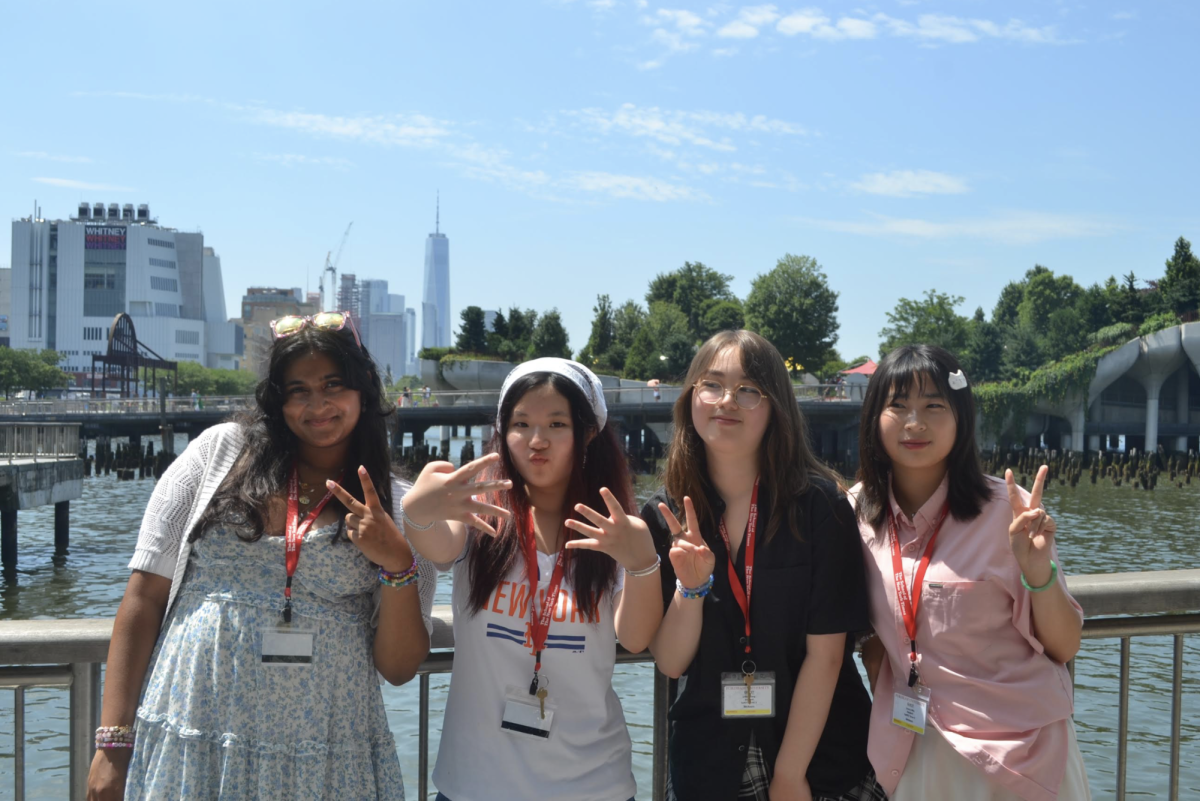
Deeksha Prasad is rarely at a loss for words. According to Advanced Placement Literature and Composition teacher Kitaro Takesue, after every essay, Prasad briefs him with a “waterfall of information,” and frequently shares her thoughts on various topics in a way that makes [him] care about them. Throughout her time in high school, Prasad has used this tendency to speak up on topics important to her in order to enact change in her community, such as serving on the Principal’s Advisory Council.
“The principal’s advisory council was a really fun experience because I got to work on a lot of the different issues that people were seeing within the school, and it was really fun to work collaboratively with Mr. Brown while addressing these issues and seeing what things we could actually do by ourselves and take control over,” Prasad said. “It was a really eye-opening experience on democracy and representative government.”
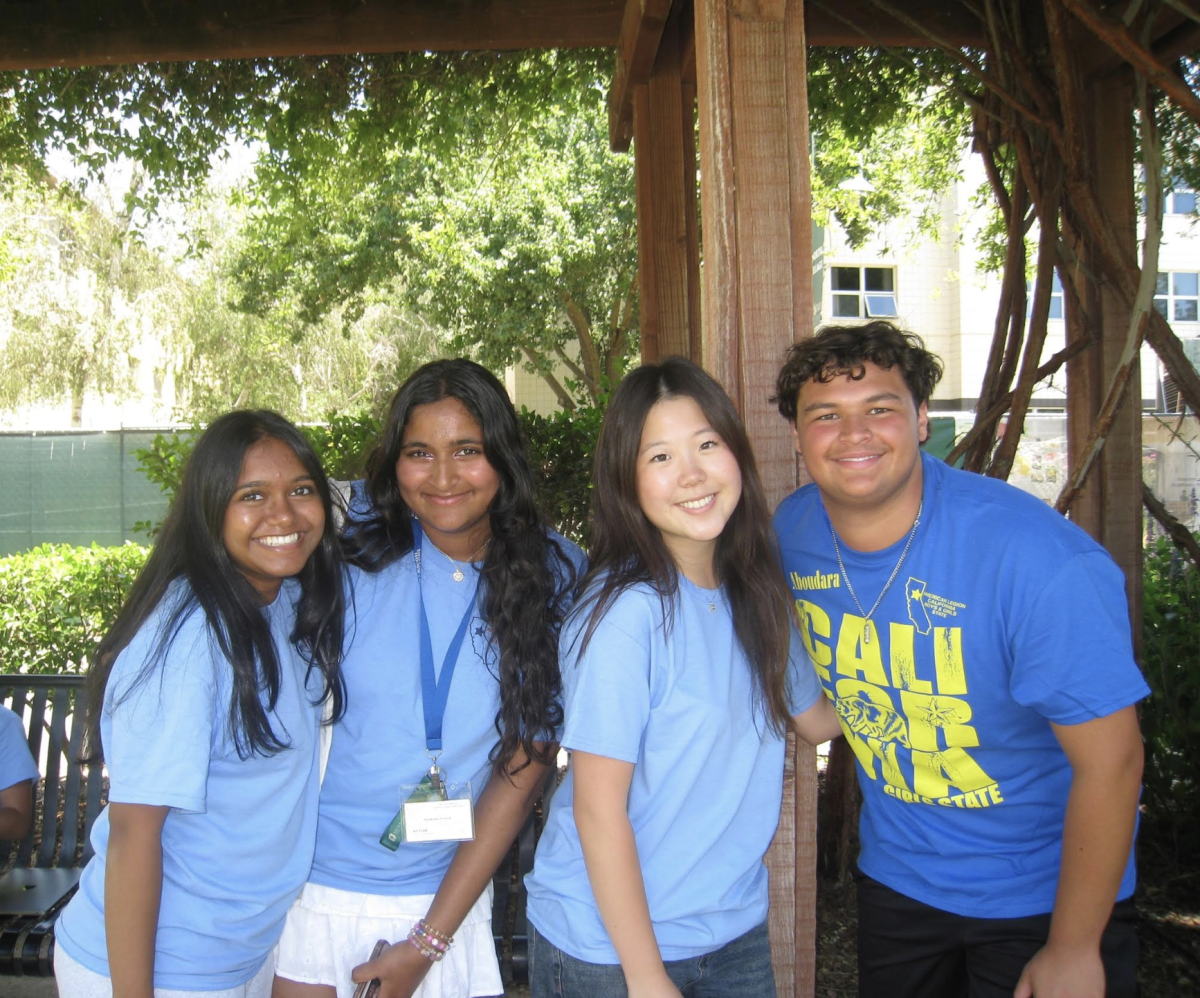
Prasad has also engaged with an interest in civic engagement and politics through other activities, such as Model United Nations. In the summer following her junior year, Prasad took part in the American Legion California Boys & Girls State program after being nominated by her teachers and passing a round of interviews, during which she participated in creating a mock government in Sacramento.
“I think what was really interesting about Boys & Girls State was how it’s a collection of really politically minded people who are all very well spoken and very thoughtful in their actions. I got to meet a lot of people with a lot of different perspectives,” Prasad said. “I feel like there were a lot of people who shared similar values and similar opinions, and it can be awesome to speak with people who feel the same way that you do and develop your opinions in that way. I also think it’s much more productive to be able to talk to people who think differently than you do, and learn what they have to say.”
Another issue Prasad has continued to engage with concerns the mental health crisis among teens. Through the UC|CSU Collaborative, a joint project organized by staff from the University of California and California State University systems, Prasad worked on a project with other high schoolers from across California to help improve the mental health of their peers and created bulletin boards for students to share their thoughts and feelings in a public space.
“We conducted a lot of interviews with neurodivergent teens, and their experience was a bit different from what we think of as the conventional experience with social media, and a lot of them felt that they found a safe space to interact with and find community that was not present for them in real life,” Prasad said. “So we ended up developing a project that was meant to simulate the feeling of support and community that you get on social media but in real life.”
In addition to the UC|CSU Collaborative, Prasad has also volunteered on the “Here” app, a “warm helpline on which teen advisors speak anonymously with teen users,” since her sophomore year. After receiving training with mental health professionals on how to respond to different topics and issues users may be struggling with, Prasad began taking shifts on the app, conversing with users in real time, covering topics from relationships to abuse.
“On [Here], you get to see the perspective of people from all walks of life, who are going through things that can sometimes be incomprehensible to us, and it makes you realize that you have a certain degree of privilege and there are a lot of things that you are lucky to have in your life,” Prasad said. “It’s helped me become a more empathetic person and learn how to reach out to people in their time of need. It can be a little terrifying knowing there’s a real kid on the other end of the line and that you are the person who’s there to support them, but I think being able to speak with them is a very fulfilling experience.”
Prasad’s passion for these issues manifests in the classroom as well. According to Takesue, her passion for relevant issues also influences her writing and how she engages with her peers. In her own words, Prasad learns with the intention of “challenging herself” and encountering “growing experiences.”
“[Her passion] comes out in her writing, for sure, and how she approaches texts and things that she cares about, and how she makes the connections between the works we read in class and the world at large. I think that’s what literature is for,” Takesue said.
In the fall, Prasad intends to study at the University of Southern California to major in English and hopes to become a professor of comparative literature. She expects that her experience advocating for issues in her community will aid her in mentoring students in the future and educating the next generations, as teachers such as Takesue have had a “profound impact” on her throughout high school.
“I just appreciate her rational exuberance. She’s so animated and passionate about life; it’s infectious. When I feel jaded or run down, I can count on Deeksha to remind me how wonderful and exciting life can be,” Takesue said. “I really appreciate
that about her and all of my students. That’s why I teach in high school. She’s the perfect encapsulation of what youthful and compassionate engagement with life really is and what we as adults can really learn from kids.”