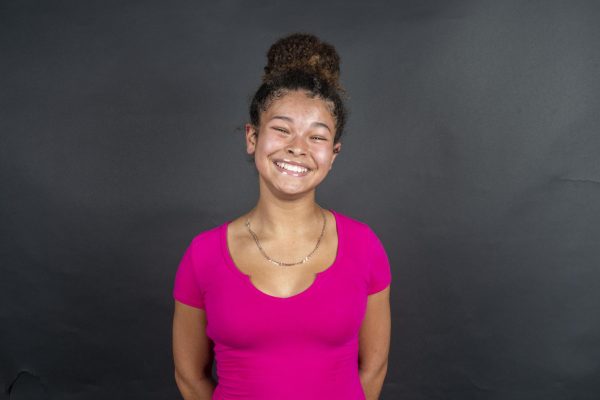
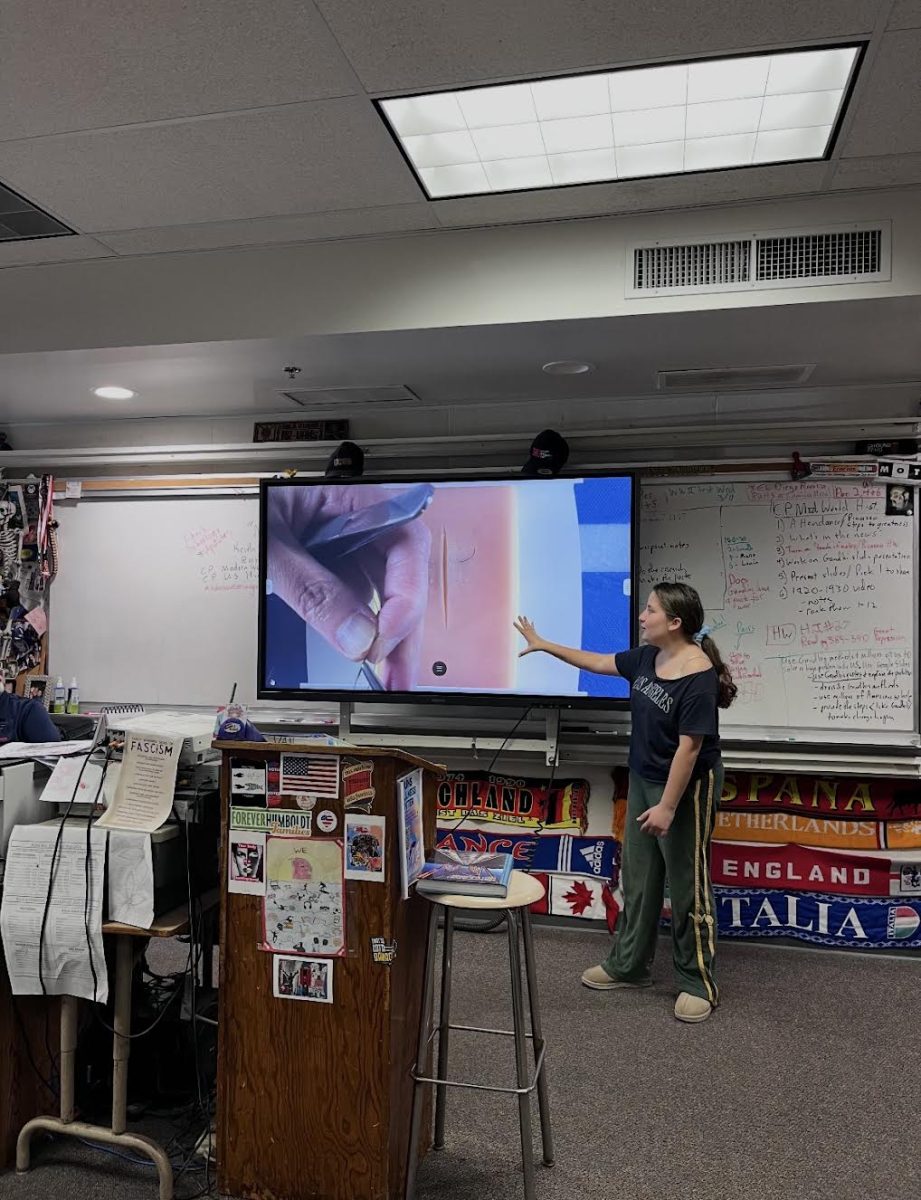
For junior Arielle Steinberg, the inspiration for the Hands on Health came from a simple realization; high school students interested in medicine shouldn’t have to wait until medical school to pick up a suture needle or learn to save a life. This club is geared toward anyone interested in learning more about medicine, offering weekly Friday workshops that range from CPR, first aid, to taking vitals and drawing blood on mannequins. By providing resources for navigating pre-health pathways-included EMT, nursing, and physical therapy, Steinberg helps students become accustomed to the clinical tools and practices they may encounter later in their careers.
Steinberg emphasizes professional-grade experiences, often featuring tactical EMT techniques like suturing. While most medical students don’t touch a suture needle until their early twenties, Hands on Health members have a six-year head start. By providing real medical tools over makeshift classroom supplies, Steinberg ensures that the experience feels professional rather than just a hobby.
“My friends were telling me, ‘Oh, just bring a banana, it works the same.’ But I refuse to do that… I wanted to have the most realistic skin model so everyone would have a chance to do it for real.” Steinberg said. “Instead, I brought a multi-layered and color-coded one, so you can see the different layers of skin, which is a lot more helpful than just having a banana.”
Among the club members is Aleksandra Brzozowska, an aspiring anesthesiologist who credits the club with turning her academic interests into tangible skills
“Every med school student is going to have to learn basic skills like suturing. Getting that experience early is nice because then you don’t have to worry about it later,” Brzozowska explains. “Using something with your hands is much more comprehensive. I learn more by participating in a structured activity instead of just reading.”
The club also features a “Debunk Day” segment where Stineberg uses a modern clinical lens to challenge medical misinformation found in popular TV shows and social media trends. These discussions lead to understanding medical truth and practical application of medical logic.
“We’ve done a couple of case studies where Arielle presents a person with a bunch of symptoms. Sometimes you have a person with a couple of symptoms, and then there’s just one particular little thing that will completely change the diagnosis. It’s so cool,” Brzozowska said.
Beyond the practical skills taught in the club, Miu Ueha, who helps with the club’s PR and strategic planning, sees the club evolving into an “interactive space” for the campus.
“It’s a place where people can exchange information about healthcare-related opportunities outside of school and actively share how excited they are,” Ueha said.
Ueha’s graphic design and advertising efforts have helped the club grow from a small group into a thriving community, making the daunting world of medicine feel more approachable.
“The club meets the needs of students seeking to advance knowledge in healthcare but who cannot make huge commitments right from the start,” says Miu Ueha. “Students can pursue their intent without the pressure of a massive time commitment.”
The club’s inclusive environment is best seen during the individual workshops, where Steinberg often works one-on-one with members to overcome personal hurdles. She recalls helping one specific student who was initially hesitant to participate.
“She told me that she had a tremor in her hands, and she at first didn’t think she’d be able to do the suturing… there was a huge progression between her struggling, to her being super confident and doing it super fast,” Steinberg said.
Whether it’s mastering a needle or navigating a complex case study, the club’s atmosphere is one of mutual support and ambition.
This club is meant to make you “empowered,” says Steinberg, the club’s founder and president. “It makes you feel like whatever goal you have in medicine is achievable.”