
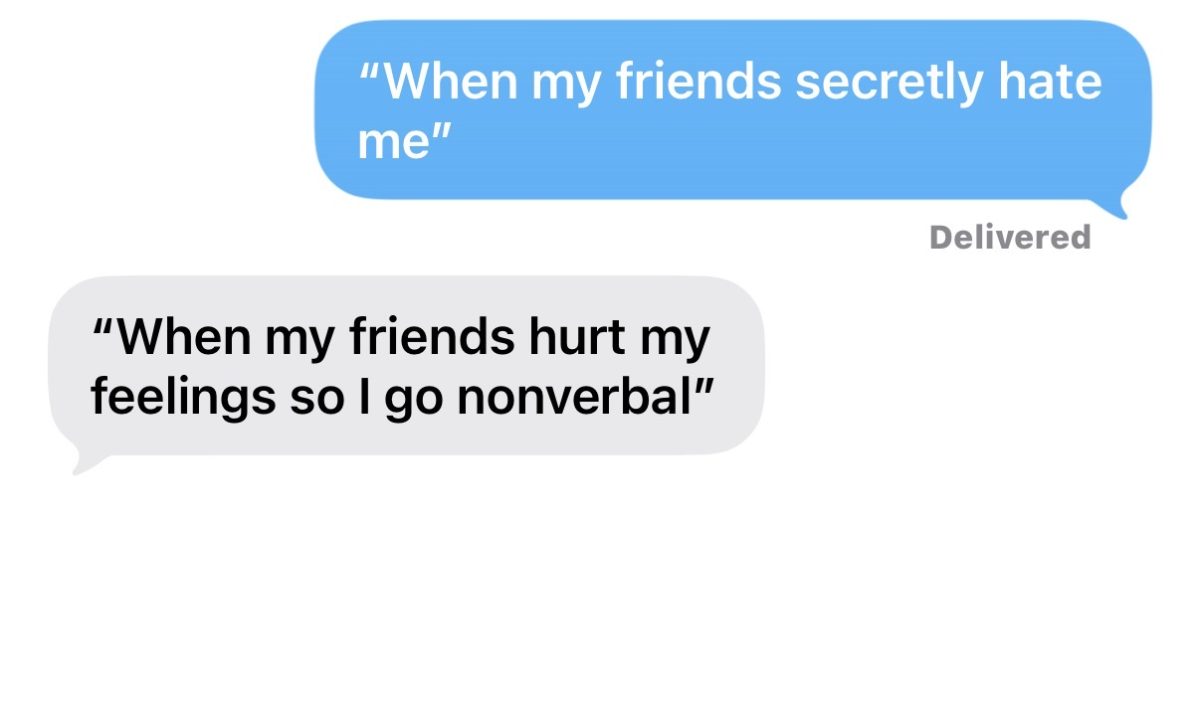
“When my friends secretly hate me.” “When my friends hurt my feelings so I go nonverbal.” I see posts like this on social media at least once a week. Online content about unhealthy friendships has become normalized to the point that people accept unhealthy friendships as part of life, but they don’t have to be. Almost all of them are centered around a lack of communication, costing people relationships.
The mantra “communication is key” is very famous for good reason, but it doesn’t only apply to romantic relationships as many associate it. While all relationships are different, from familial to romantic to platonic, they all require clear communication to thrive. According to the Canadian Positive Psychology Association (CPPA) friendships thrive off of “relational maintenance behaviors,” or the active choice to engage and reengage in one’s relationships to keep them active and healthy. These behaviors can be through verbal or nonverbal communication, and include reaching out directly, acts of service or shared activities. All of these build strength and reliability in a relationship, allowing it to grow and last decades.
The CPPA also states that self-disclosing is vital to maintain closeness within a relationship. Self-disclosing is the act of sharing intimate or personal information with friends. Obviously this does not mean that you have to confess all your secrets to anyone you want to befriend. It simply means that to kindle and grow relationships, trust and intimacy must be felt by both sides, and this often can be achieved through self-disclosure. Telling your friend an embarrassing moment or a random thought may not seem groundbreaking, but it builds up the repartee within a relationship, and builds the intimacy that close friendships are marked with.
It’s also important to note that not every person has to be your ride-or-die. It is healthy to have acquaintances, friends and close friends. It is part of being human to have different relationships with everyone, so naturally a different level of communication is necessary for each. With an acquaintance you might share a weekend plan, a lighthearted opinion or a surface level emotion. These acts of communication maintain the feeling of knowing one another without excessive sharing or discomfort for either party. The inverse is also true, if you only share superficial information, that relationship will remain an acquaintance. With friends, one might share more personal information: ideas, dreams, hobbies, invites to social outings. This light level of self-disclosure is important to form the relative closeness that qualifies a friendship.
A best friend is different, deeper. For one’s close friends or best friend, the dynamic is much more intimate and personal. According to the Positive Psychology People (PPP) close friendships are classified by their interaction, supportiveness, positivity and openness. The support, interactions and sharing that defines openness are all forms of communication. According to the PPP, close friendship is when “both parties feel safe to disclose information to one another that is personal and sensitive”. This may include sharing deep inner thoughts, romantic interactions or personal ideas and information.
I have friendships that have lasted since preschool, since second grade, and strong friendships that developed quickly during high school. Closeness is not defined by length of relationship, but by the sincerity of the relationship. I tell my closest friends everything, we have no barred topics, no information too embarrassing or that you’d be judged for. The knowledge that I have people I can be completely open and myself to without fear is one of the safest feelings in the world. According to the CPPA, these secure relationships improve mental wellbeing and people’s perception of life satisfaction.
I have also had friendships that weren’t as successful. The occasional petering out of old friendships as life keeps you busy are bound to happen at least once in a person’s life. I still look at these people with warmth and kindness, but they are no longer hitting the interaction and openness levels that qualify a close friendship. This is no fault of anyone’s, but life can lead relationships to a close as the communication dwindles. When I went to different schools with people, stopped doing the same activity or sport with people, natural decreases in time spent together and communication have led to a distance in these relationships. The important thing to remember is that it doesn’t necessarily have to happen that way. My best friend of ten years has gone to a different school since fifth grade, but texting, hanging out, even doing errands together or chores on the phone have kept the relationship strong and full of intimacy. The key to maintaining closeness and relationships in general all boils down to active communication.
Of course, there have also been more sinister relationship demise in terms of communication. Friendships where people keep small things to themselves that add up to make big fights. People who don’t speak directly and hold onto misinterpretations cost themselves relationships. This type of dysfunctional communication, or lack thereof, is a guaranteed way to turn relationships sour, and possibly lose them forever. Often this can be due to “people pleasing” or the worry that bringing up an issue would hurt the relationship, but in my view, if the relationship is already suffering, you may as well try to fix it rather than wait for its imminent demise. Personally, trust and openness is key. When challenges come in a relationship I find it best to address them head-on. This has allowed personal growth for me and others, and relationships that can last for a decade and counting. But those who take issues too personally, or hold onto miscommunications too strongly, can corrupt any attempts to heal relationships and can lose many of them. I know people like that, and it’s always sad to see.
The best thing for any relation is always clear and honest communication, with both parties looking to resolve an issue, not perpetuate one.