
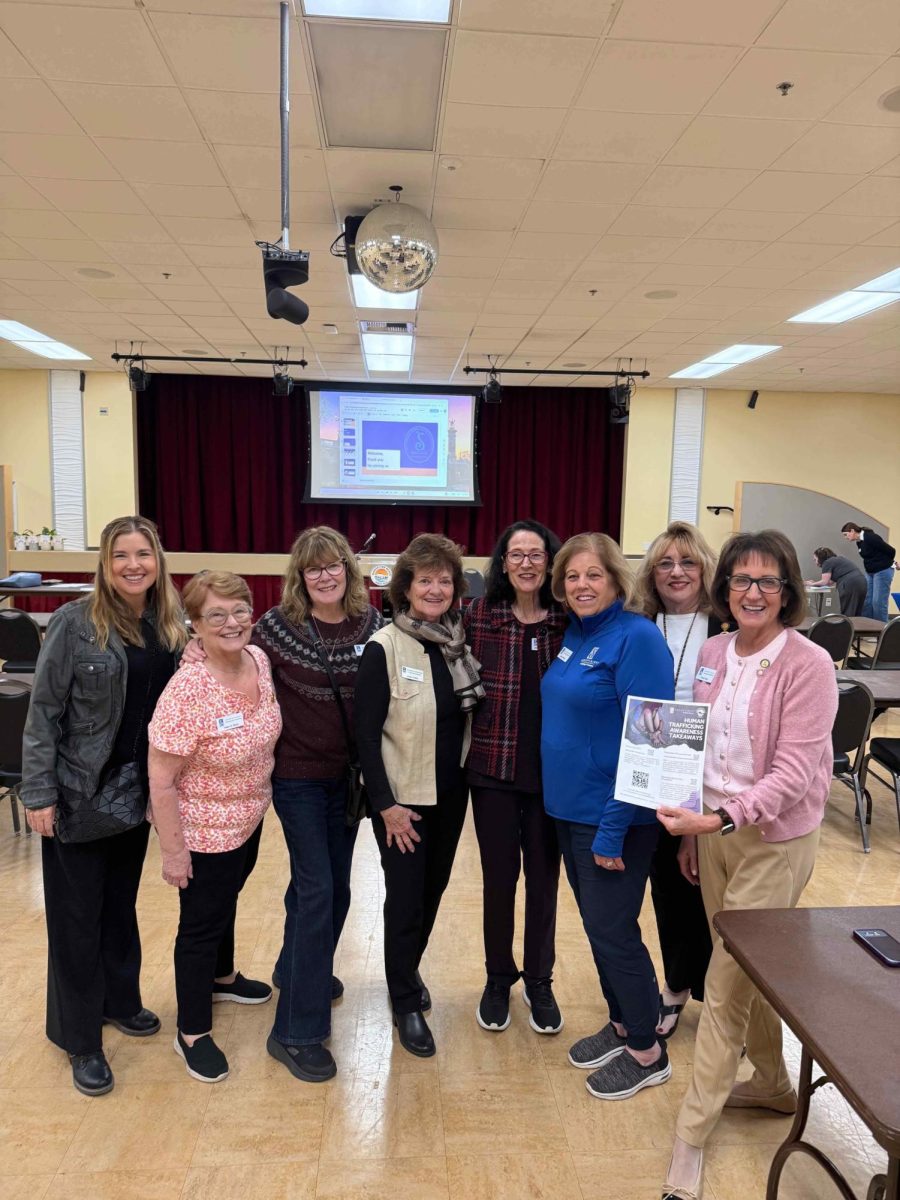
Community members filled the room for a special forum held during Human Trafficking Prevention Month, organized by Soroptimist International of South Bay and South Bay community partners. The event focused on educating families, students and educators about how trafficking happens, how young people are targeted and what warning signs can appear in everyday situations. The event kicked off with the chair of the South Bay chapter of the Soroptimist group, welcoming everyone to the event.
Organizers outlined the schedule for the night, which included featured speakers, a moderated panel discussion and time for community questions. They emphasized that the forum was designed to give people practical tools rather than just information.
“We’re grateful you chose to be part of this,” the Soroptimist South Bay chair said. “The first step to protecting the vulnerable is teaching the vulnerable [how to act in situations where they may be a threat or victim of trafficking].”
Manhattan Beach Police Chief Rachel Johnson welcomed attendees and thanked local organizations for helping bring the event together. She stressed that trafficking is not only something that happens in distant cities or countries—it can affect coastal communities as well.
“Sometimes we don’t think it touches us, but it does, whether through our neighborhoods, our hotels, or people who pass through our city,” Johnson said.
She also explained that law enforcement works closely with nonprofit groups and educators to raise awareness and help survivors rebuild their lives.
“We want to share what we see from a law-enforcement perspective and talk about how the public can help,” Johnson said.
What Johnson means by “what we see” is that there are ways to prevent things like this from happening; one way the public can help is to report any suspicious things they see. A representative from the hosting organization also spoke about its mission to empower women and girls through education, opportunity and safety. They noted that January is recognized nationwide as Human Trafficking Prevention Month. Officer Christopher Ineguez of the Manhattan Beach Police Department stresses the importance of awareness, especially in the South Bay.
“Trafficking is not just an international issue. It can happen anywhere, including right here,” Ineguez said.
Sandy Pendleton Dorton, the founder of Project Shield, which is a program to help educate, protect and empower youths from the dangers of trafficking, then took the stage and explained how her years as a middle-school counselor inspired her to focus on prevention programs for students, teachers and parents.
“My background is in working with kids, and that’s why prevention is so important to me,” Dorton said.
She described how social media, messaging apps and online games have changed childhood and can sometimes be used by traffickers to gain young people’s trust.
“Education is a powerful weapon,” Dorton said. “We want to empower kids to stay safe and look out for their friends.”
Dorton also outlined warning signs for hotels and other businesses, such as unusual booking patterns, guests who appear anxious and people whose identification or money seems controlled by someone else.
“You don’t have to be certain. You just have to care enough to report,” Dorton said.
Throughout her presentation, she encouraged parents to talk regularly with children about online behavior and urged teachers to watch for sudden changes in mood or friendships.
“We can change the trajectory of all this happening. If we don’t teach them the internet will. So our series is targeted and streamlined, and it’s done for a school,” Dorton said.
Afterward, Ineguez of the Manhattan Beach Police Department spoke, highlighting his years of experience mentoring officers and working directly with the community.
“I’m passionate about this subject because of what I’ve seen firsthand [regarding trafficking in our area],” Ineguez said.
He shared that early patrol work exposed him to cases involving young victims, which pushed him to focus on trafficking investigations and prevention.
“These are the real victims. Many of them have been manipulated so deeply that they don’t even realize they’re being harmed,” Ineguez said.
Ineguez described how trafficking in Southern California can involve street-based activity, hotels, and online recruitment, noting that control is often emotional and financial rather than physical.
“It’s about manipulation. Money, communication and movement are all ways traffickers keep power,” Ineguez said.
He also explained that police rely heavily on tips from residents, hotel employees, and community members to uncover suspicious situations and connect victims with advocates.
“If something doesn’t feel right, make that call. It could change someone’s life,” Ineguez said.
As the evening continued, speakers returned to the idea that teamwork between schools, nonprofits, families and law enforcement is the most effective way to prevent trafficking before it starts.
“When a community becomes educated, traffickers lose their power,” Ineguez said.
The forum ended with a call for attendees to share what they learned, connect schools with prevention programs, and remain alert in their daily lives.
“We don’t just need people to know trafficking exists,” the Soroptimist South Bay chair said. “We need people willing to do something about it.”