
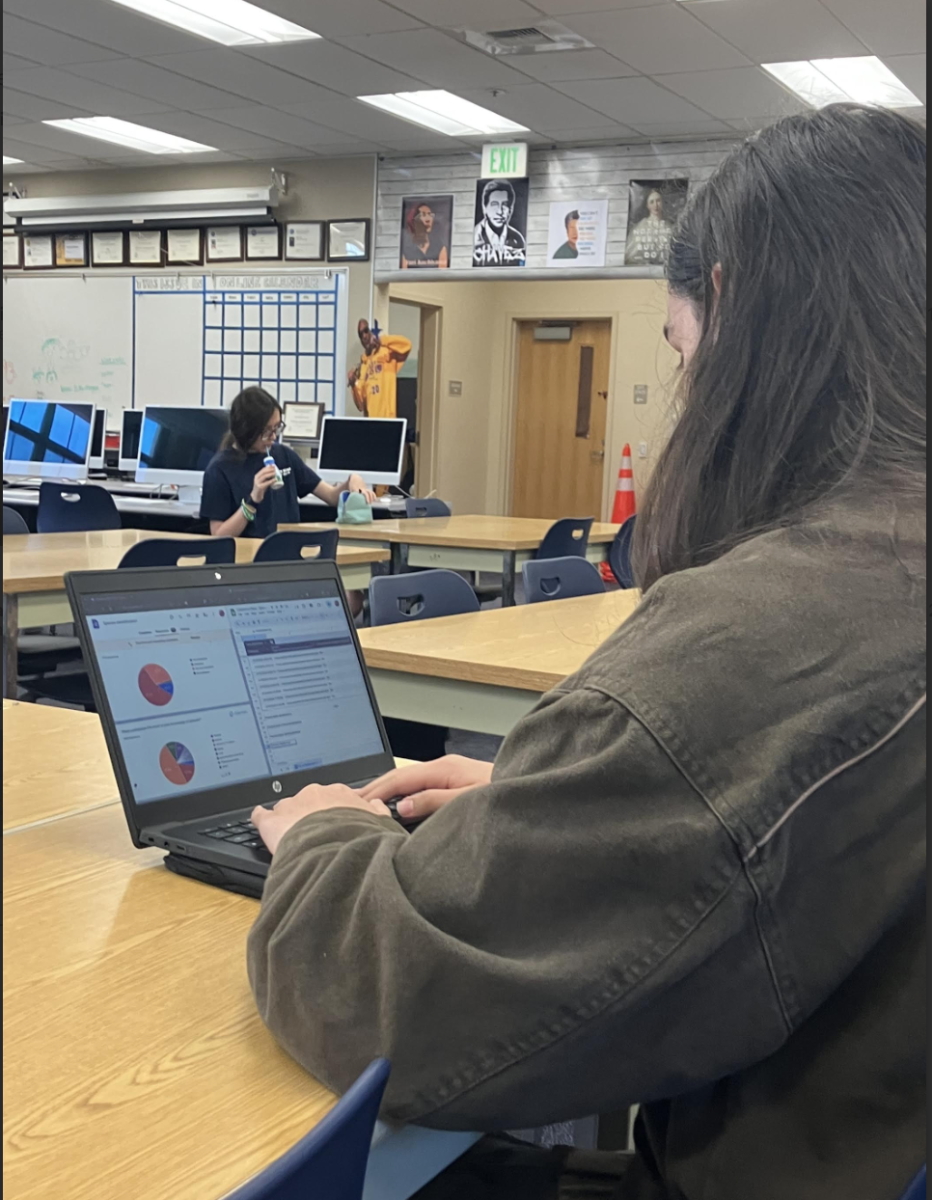
It’s late at night, and there are still 50 academic Elton B. Stephens Company (EBSCO) research sources left to review for Advanced Placement (AP) Research. Senior Celestino Pace focused his AP Research project on the endangerment of plants and animals, and through his research, Pace came across a specific species of butterfly.
“During my research, I came across the El Segundo blue butterfly, the only endangered species within Redondo Beach that I know of,” Pace said.
This specific butterfly is significant to Pace mainly because it lives in such a restricted area. This area spans from LAX to Palos Verdes, making it very easy for this species to become extinct if not protected.
“In my research, I found the South Bay Parkland Conservancy, which does research on the El Segundo blue butterfly. They have also been working towards conserving them as a species and working towards moving them away from endangerment.” Pace said.
Pace continues to utilize them as a primary resource because he not only was able to learn a lot from them, but he was also able to “see what people around this community are doing”.
“The South Bay Parkland Conservancy is here to conserve animals and to conserve the area. It is very important to me, because when I was younger, I always loved animals,” Pace said.
During his youth, Pace researched as much as he could because of his fascination with animals. Even at just six-years-old, Pace hosted an animal show for his birthday, where the children could learn about different animals. Previously, he resided in Santa Clarita, which Pace mentioned is “very much in the wilderness,” so he was able to surround himself with a basic knowledge of plants and animals. Pace’s AP Research teacher, Cassandra Jones, came across his passion and curiosity as well.
“Celestino is so lucky because he knew his topic really early on, and I love when students are truly following their own curiosity,” Jones said.
Not only was Pace fortunate to already have an idea of what he wanted to focus on, but he also benefited from his previous knowledge and research of animals at a younger age. Jones notes that it is very important for the student to care and be in a sort of awe of their topic or events that correlate to their topic.
“If you don’t really care or know about it, then you won’t appreciate it and you won’t try to conserve it. [Pace] had a lot of knowledge going into it of what needed to be done,” Jones said.
The ultimate goal of Pace’s research project is to protect the animals surrounding our community. He wants to ensure that the younger generations know what is endangered, so when they mature, they are able to make a difference by preventing their extinction.
“The goal of my research is to see if there’s a lack of awareness, specifically, at Redondo. By determining data, I can help future people, including myself, find ways to raise awareness in this area,” Pace said.
Through Pace’s research, he’s discovered that the majority of society gains information from various types of media, including movies, news and TV shows. However, the issue lies with what they decide to showcase.
“The issue is that [the media] primarily focuses on more charismatic species, so well-known species. For example, animals like koalas or wolves, something general instead of more specific species, like butterflies,” Pace said.
Pace says that in order to avoid this, it is best to diversify the sources of information. To collect data, Pace surveyed students at RUHS, testing to see if they could successfully identify local biodiversity. According to Jones, Pace puts a lot of thought and effort into every action he takes for his projects, even the singular questions he asks when surveying students.
“Celestino is one of the deepest thinkers. He doesn’t make one move in his paper, his survey and his study without really thinking about it and justifying it in the best way,” Jones said. “As he’s going through the data analysis, he’s so thorough and really makes sure that he’s doing it correctly and giving it the attention it deserves.”