
If you are in AP Psychology or know someone who is, chances are you’ve seen some personified eggs making their way around the school. In class, students were told to remove the yolk from an egg, draw faces and clothes on the egg and carry it around for a week without breaking it. I myself am in the class, and on my journey with my egg baby, I got countless comments that older generations had to take care of a very real-looking baby doll in their Home Economics classes.
And then it got me thinking: Why are we no longer teaching Home Economics?
Now, don’t get me wrong. I’m not an advocate for whatever that baby doll project is (I mean, a doll crying and waking teenagers up in the middle of the night is pretty overkill), but Home Economics taught so many skills that kids still need in life, skills that many people don’t learn until much later.
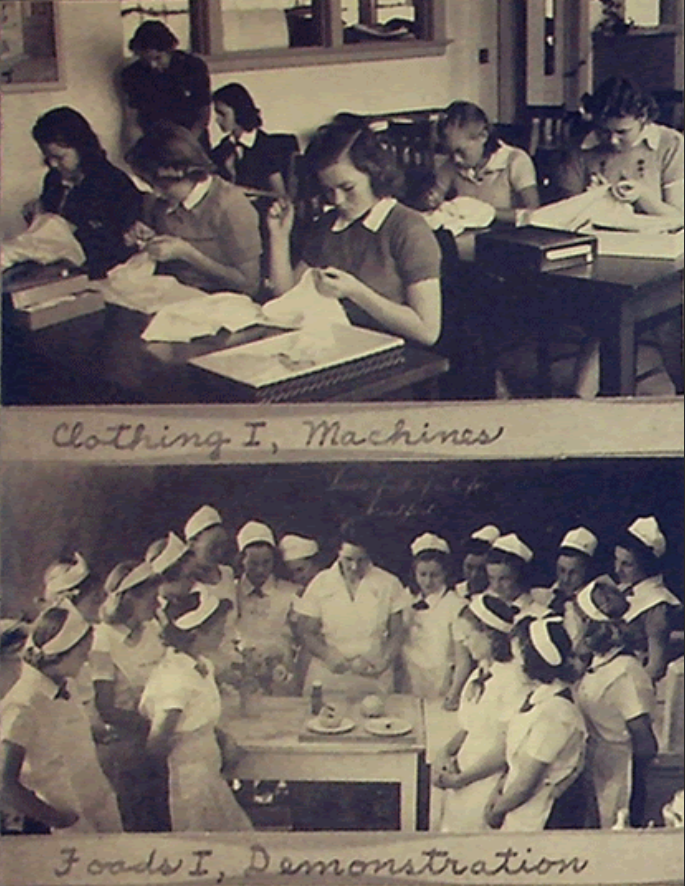
According to the California Learning Resource Network, Home Economics was a class taught in the early to mid 20th century that taught students skills such as budgeting, sewing, cooking, drivers education and more. This class began to fade out around the 1980s and 1990s due to budgeting problems and the cultural shift towards college preparatory courses and standardized testing and away from gender stereotypes.
While we have a small Sexual Health Education unit in Biology as a part of RBUSD’s Positive Prevention Plus program, as well as electives like Business and Culinary, students don’t have a required general class teaching them these important life skills anymore.
With the rise of convenience services that deliver things to your door whenever you need them, kids are learning less and less to rely on their own skills and are becoming more dependent on their phones. Which, while I agree that phones are an amazing resource, they’re not always going to be there for us and we’ll definitely be put into situations where we have to do things ourselves.
Whether it’s through talking to my friends or looking on social media, a big complaint I hear from people is the fact that high school doesn’t actually prepare you for adulthood. It’s very focused on college preparation, making students memorize countless facts, but because students go into a variety of careers, many of these subjects may not be relevant once they graduate and should be replaced by skills nearly everyone will need to know.
I know so many people who lack the skills to cook a simple meal or fix a tear in their clothes. I mean, my older brother didn’t know how to write a check until at least his mid-twenties, which is a skill I learned when I was in fourth grade. With the rise of artificial intelligence [AI] use, it’s important that people learn how to do things that can’t be done by AI.
Obviously I don’t want this class to be taught the same way it was back when it was at its peak of popularity. It was rooted in sexism, seen stereotypically as a “female” class and enforced harmful notions of gender roles. It was required that girls take Home Economics, and although it was available for boys to take, classes were split between girls and boys. I think that a general ‘life skills’ class would help our generation out a lot, especially when it comes to budgeting. Despite the Personal Finance class RUHS provides for seniors, many people, including myself, are taking other math classes and cannot take advantage of that opportunity.
It’s no secret that our economy is not the best right now; according to National Mortgage Professional, only about 26.1% of Gen Zers owned their home last year due to home costs surpassing income. While that’s not entirely our fault, I think it would be beneficial for our generation to learn how to budget a little better. How many of us can say we know how to file taxes? According to the Tax Foundation, over 61% of surveyed taxpayers were unaware of “basic tax concepts related to income tax filing.”
I, for one, can’t wait until I leave for college, but I’m also a little freaked out. I’m only 17-years-old and the majority of the information about independence I get is from strangers on TikTok. I was never taught how to manage my finances and budget, or manage my home or how to know when I need to check my car, other than the occasional video online showing me how to change a tire.
Our generation, though extremely involved in other parts of adulthood such as politics, still need help integrating into “the real world.” If Home Economics were to be integrated into schools again, it would make Gen Z’s journey into adulthood easier and we wouldn’t have to learn things the hard way.