According to President Donald Trump, this halftime Super Bowl show did not represent America’s standards of “Success, Creativity or Excellence.” I beg to differ. And to preface, yes, Puerto Rico is a part of the United States.
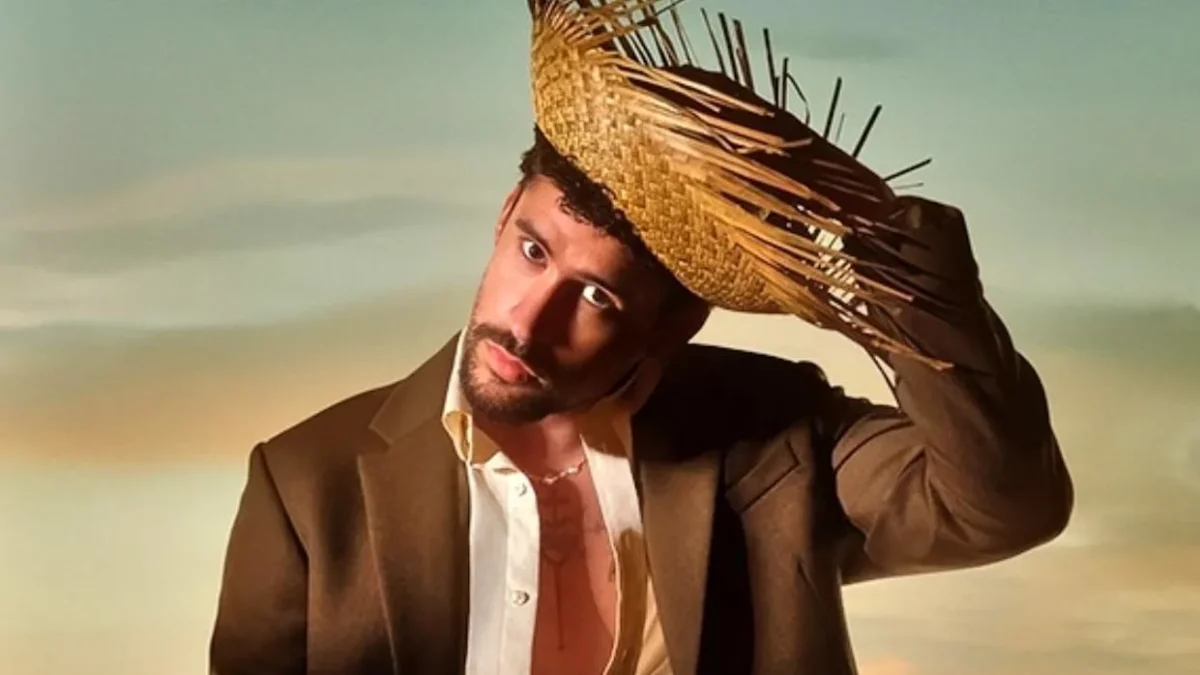
Following on the heels of his Album of the Year Grammy, the first fully-Spanish language album, for “DeBí TiRAR MáS FOToS,” Bad Bunny took the stage at Super Bowl LX with a fully-Spanish language performance. Despite the obvious language barrier for many viewers, Bad Bunny put on an amazing show, not short of any references or statements.
Travelling over fields, the show opens with a greeting. A man with a guitar tells the audience, “Qué rico es ser Latino. ¡Hoy se bebe!” which translates to “How wonderful it is to be Latino. Today we drink!” setting the tone for a performance that celebrates and is a testament to the joy of Latino culture and life. Considering the discourse over immigration and Immigration and Customs Enforcement activity that disproportionately afflicts Latino communities, this opening statement is powerful: Latinos, in all American countries, are proud to be who they are and are here to stay.
With Bad Bunny standing, back turned to the cameras and surrounded by jíbaros, “Tití Me Preguntó” begins to play. Sugar cane, which was the Caribbean cash crop during the 19th and early 20th centuries, contains a long history of Spanish colonialism and African slavery within these countries, including Puerto Rico. Shortly after slavery was abolished there in 1873, the U.S. took over Puerto Rico in 1898 as part of the provisions of the Treaty of Paris after the Spanish-American War, leading to U.S. sugar companies reaping great economic benefits from Puerto Rican land and labor. Informing the audience of Puerto Rico’s history, the focus is pointed to the lasting impacts that still affect Puerto Rico today, setting up his message on maintaining Puerto Rican culture in the face of moments that threatened it.
Bad Bunny, navigating through the sugar canes, passes by multiple hallmarks of Puerto Rican and Latino culture. The coco frio and piraguas, Puerto Rican shaved ice, stands are Puerto Rican staples. Dominoes are commonly played within the Caribbean and are representative of the community and togetherness across people and generations. Nail technicians are significant to the Latino community, highlighting specifically female creativity, connection and business. The taco stand, which has been a staple in Los Angeles communities, expands the idea of Latino establishment and reflects how Latinos are not only pillars within their communities but in the greater U.S.
He transitions into “Yo Perreo Sola” and “Safaera,” singing from the roof of a casita in the traditional Puerto Rican style and architecture, which are increasingly becoming outdated due to the gentrification of Puerto Rico. A scene of celebration and fun, famous Latino icons like Karol G., Pedro Pascal and Cardi B. can be seen among the dancers.
After he falls through the roof of the house, the party continues. The camera travels through people dancing with each other with a mix of songs from various Puerto Rican artists, for example, Daddy Yankee’s “Gasolina,” until arriving at a truck, on top of which Bad Bunny stands, singing his song “EoO.”
Abruptly ending, a string section begins with the instrumentals to his song “MÓNACO,” to which he introduces himself as Benito Antonio Martínez Ocasio. Notably, the back of his football jersey features his mother’s surname, Ocasio, and the number 64, which was revealed to be a reference to his uncle Cutito’s birth year, honoring the person who introduced the NFL to him. Bad Bunny then sets off into his self-belief speech, saying that he is at the Super Bowl, performing, because he never stopped believing in himself, then pointing directly to the camera, telling the audience to do the same. For those who identify with Bad Bunny in any way, whether it be as a Puerto Rican, Latino or even supermarket bagger, it was a compelling moment, demonstrating the potential futures that can be achieved.
Then a real wedding took place, followed by Lady Gaga’s guest appearance and salsa version of “Die With A Smile.” Ocasio joins the festivities, and it is a beautiful moment: With people across all generations dancing together and the married couple cutting into the cake, it spoke to the love and family found within Latino communities. Passing by the couple, he tells them “Baila sin miedo,” “Dance without fear,” which again reinforces the idea of being proud in one’s Latino identity, to not have it be a source of fear or hiding but instead one of beauty and joy, and in the face of current immigration policies, which at times seemingly chips away at that, it is doubly impactful.
Bad Bunny switches gears, transitioning into “NUEVAYoL,” a song dedicated to the Nuyorican diaspora following World War II and the creation of a distinct Puerto Rican culture apart from their homeland. Receiving a shot from Toñita, otherwise known as María Antonia Cay, he honors her contributions as a pillar in shaping Nuyorican culture and her founding of the Caribbean Social Club in Brooklyn, contributing to the wider idea of the preservation and strength of Puerto Rican culture.
Temporarily pausing, Ocasio makes his way over to a little boy watching his Grammy win on television with his family and hands his Grammy, patting him on the head, symbolizing the self-belief that he spoke on earlier about, with this representing the honoring of him as a child with aspirations to become the artist who he is today. Similarly, his handing off of his Grammy also represented the hope that he passes on to future generations of Puerto Ricans like him with a similar dream, serving as a message, telling them that it is possible.
The audience is then greeted with another surprise performer, Ricky Martin, a Puerto Rican and openly gay musician, singing “LO QUE LE PASÓ A HAWAii,” a song warning against the effects of colonialism and gentrification. Hawaii, which became official U.S. territory in 1900 after its annexation in 1898, is utilized as a cautionary tale, and to prevent the same fate from falling upon Puerto Rico, they must fight for the preservation of the Puerto Rican culture, life and identity despite forces mentioned in the song’s lyrics: “Quieren quitarme el río y también la playa/Quieren el barrio mío y que abuelita se vaya,” which translates to “They want to take my river and my beach too/They want my neighborhood and my grandma to leave.”
Shifting to a scene of workers falling from sparking powerlines, “El Apagón,” which translates to “The Blackout,” begins to play, presenting criticism of Puerto Rico’s frequent blackouts due to its fragile power grid and the U.S. government’s failure to deal with the aftermath of Hurricane Maria, another consequence of the colonialism of Puerto Rico.
After Ocasio climbs up one of these utility poles himself, they spark again, and he transitions into “CAFé CON RON.” People with flags of countries all across America can be seen running to the foreground, and the music cuts as Bad Bunny delivers his first words spoken in English, “God bless America,” then names over 20 South and North American nations, holding a football that reads “Together we are America,” redefining the American identity, and behind him the wide screen reading “The only thing more powerful than hate is love.”
There’s bound to be so many things that I missed or got lost in translation, but the message of love, unity, pride in one’s culture, it’s potent and visceral for anyone. Don’t turn on one another or see each other as the enemy just because of cultural or linguistic differences. Beyond these two continents sharing an American identity, we share a human identity, one that allows us to love and unify with each other and rise above the hardships and obstacles of gentrification, colonialism or government, create new cultures and reach and pass on success and excellence to the generations to come.
So what’s the moral of the story? Well, Bad Bunny, in his final message of his performance, told us himself, “Seguimos aquí”: “We’re still here.”