A single bag of white rice and a stack of tin cans do not usually inspire “gourmet” thoughts. In most shelters, these food items are staples of survival, yet they are often not utilized to their full potential due to a lack of educational awareness surrounding nutrition or a lack of resources, such as stoves and ovens.
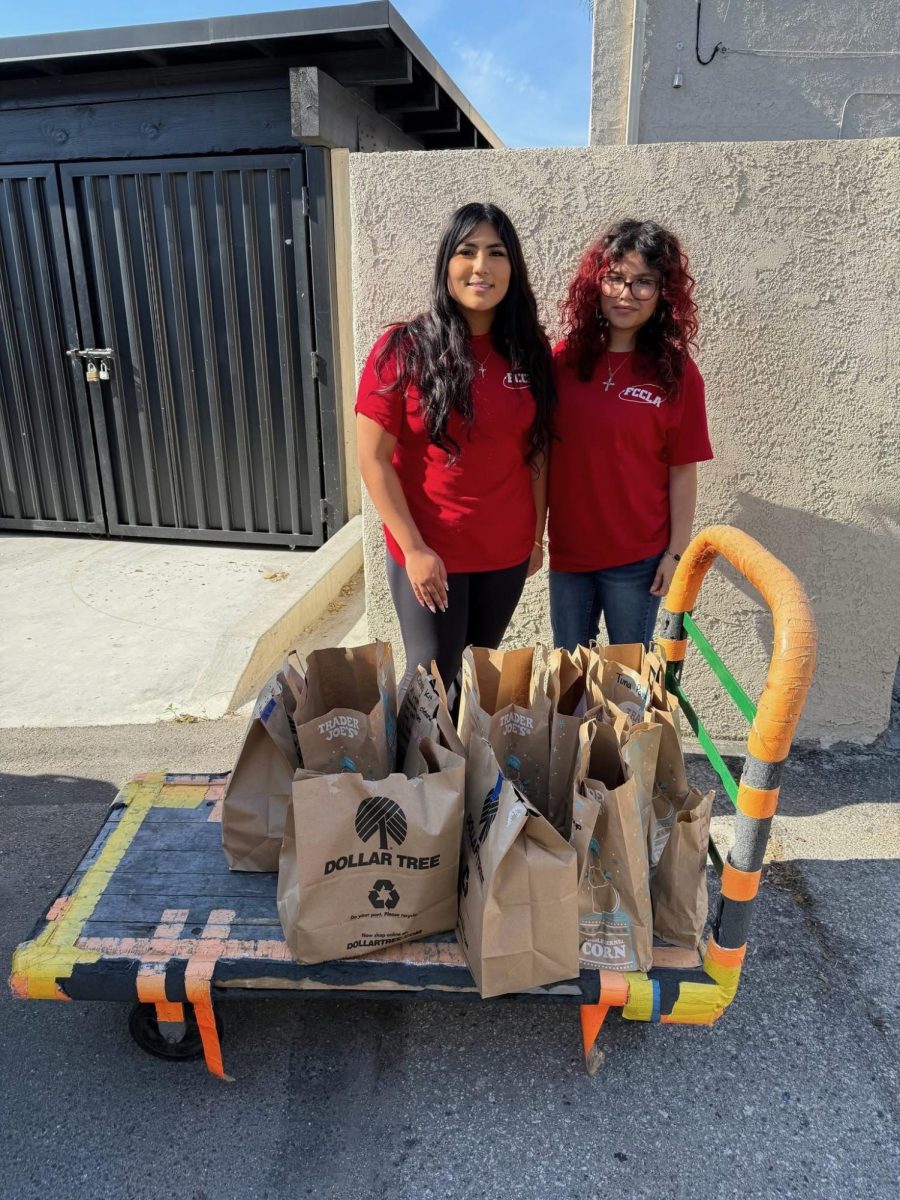
Seniors Sofia Hernandez and Kaylee Blas are the president and vice president, respectively, of the Family, Career and Community Leaders of America (FCCLA) culinary club at our school. They are not just donating food; however, they are also donating agency by utilizing the national FCCLA curriculum to bridge the gap between classroom skills and the “real world” needs of society. By redesigning traditional recipes and adapting them to work in a microwave or on a single burner, meals are elevated from a “shelf-stable donation” to a “nutritious family meal.”
Hernandez and Blas’ shift in strategy was not by accident; it was intentional and personalized. To understand how to actually help people in need, Hernandez and Blas went straight to the source.
“We created a survey and emailed that survey to various food banks, [asking the question] ‘What are their specific needs?’” Hernandez said. “We saw a common trend where families are given these food supplies, but they don’t know what to do with them. They don’t know how to cook them, or they don’t have the resources to cook them.”
Christina Martin, culinary teacher and FCCLA partner, watched her students move beyond standard classroom techniques to solve this specific dilemma. From a professional standpoint, the challenge was not just making the food taste good; it was making it work for everyone.
“I think the best part is that they made the recipes flexible for different types of home environments where certain cooking conditions may or may not be available,” Martin said. “People can make substitutions based on what they have.”
For Blas, implementing that flexibility meant looking at the most basic pantry staples through a creative lens. She realized that while a bag of rice is a common shelf-stable necessity, it can often feel like a “boring” dead end for a family in a shelter.
“We use rice in almost every single one of our recipes,” Blas said. ”We have basic rice that we turn into dishes families can make, such as a pineapple fried rice, or something that tastes better.”
Beyond just adding flavor, the project aims to dismantle the idea that “shelter food” has to be unhealthy. Hernandez notes that for many families in crisis, the most accessible option is often the least beneficial for their long-term health.
“Statistically, [in] America, the most convenient food is fast food,” Hernandez said. “However, it’s not nutritious, and, if anything, it’s just contributing to obesity in America. By having these recipes, we’re making foods healthy, but we’re also making them interesting and fun.”
To ensure these meals met high nutrition standards, the duo drew from their previous FCCLA competition experience in sports nutrition. They made sure to incorporate well-rounded, accessible, shelf-stable canned proteins and vegetables to create meals that are as functional as they are flavorful.
“We do try to implement healthy ingredients, so it’s just not fried stuff or soup every single time,” Blas said. “We make sure it’s a balanced meal.”
Hernandez and Blas faced a challenge in overcoming student apathy. They realized that while the need was great, getting other students to notice posters in crowded hallways was its own technical challenge.
“Students don’t really look at the posters,” Blas said. “So what Sofia and I did was that we posted on our Instagrams.”
Martin believes that the foundation laid this year will change the legacy of the FCCLA at our school for years to come.
“Kaylee and Sofia have just taken it to a different level and went above and beyond,” Martin said. “Their project is unique and will set a pattern for future ways we give, connecting service to the actual needs of society instead of just giving what they thought people wanted.”