

The Fuss about Feminism


Sophomore Kaitlyn Otey was in sixth grade when she overheard a few older boys playing Smash or Pass, using the names of their female classmates. Smash or Pass is defined as a game where players choose if they would “smash” (have casual sex) or “pass” (refuse to have sex) with the chosen person.
“They were saying terrible things,” Otey said. “I was 11 years old and they were like, ‘Pass, she’s too flat.’”
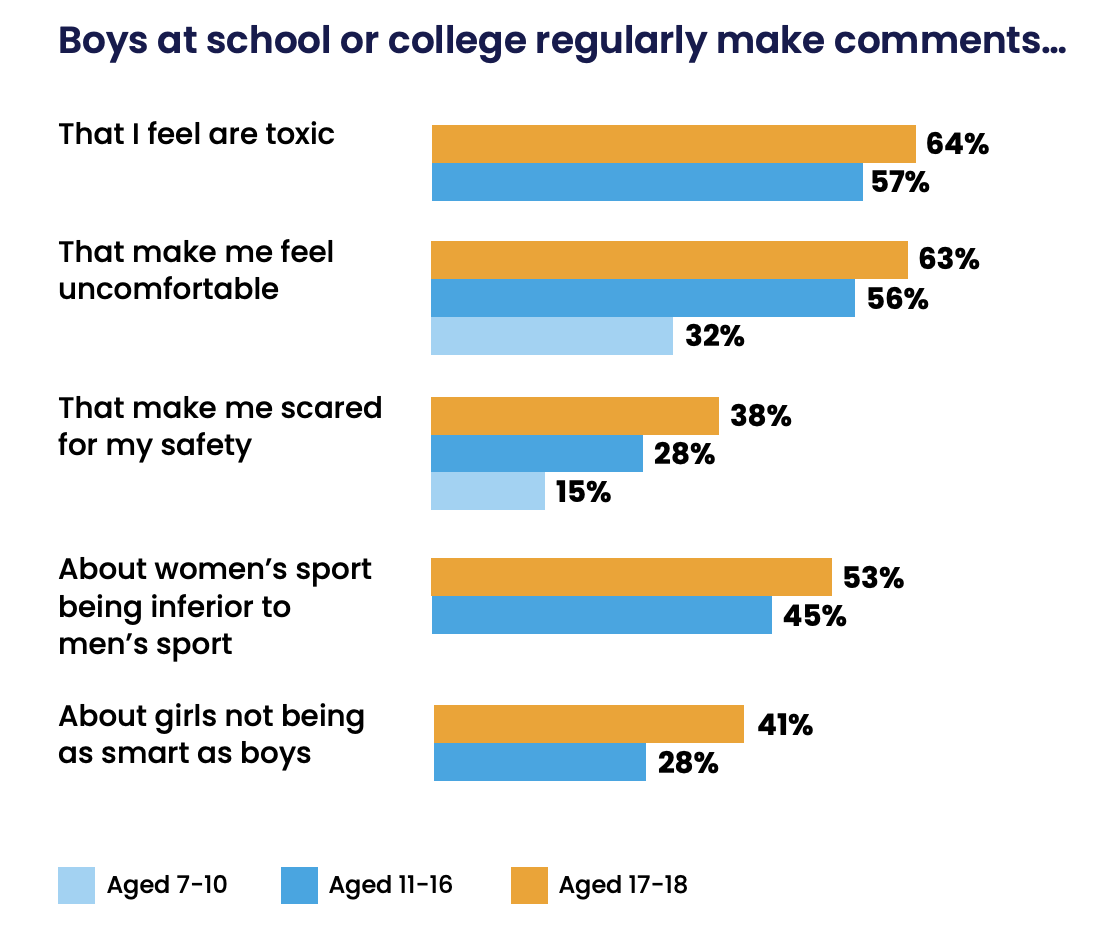
Unfortunately, the casual sexualization of women has become the norm, even amongst young girls. The annual Girls’ Attitudes Survey conducted by Girlguiding reveals 57% of females aged 11 to 18 and 32% of girls aged 7 to 10 have heard boys at school make comments that made them feel uncomfortable. Otey herself has experienced this multiple times, noting how the attitudes of her male friends have changed over time and have slowly become normalized.
“When I was younger, I went to a school where I mostly hung out with boys. As I got older, I noticed them making more sexual comments about me more frequently,” Otey said. “At first, it just became so normalized that I barely even noticed it and I brushed it off. But I can see now that because that started at such a young age, and it does for most women, that you don’t really recognize it until it’s too late, and you realize that you’ve basically been objectified your whole life.”
Female high schoolers commonly hear sexist comments from classmates. After hearing them so many times, junior Evelyn Thomas, co–president of the Women in Sports Club, has become desensitized to these types of comments.
“I think especially in high school, everything is kind of a joke. Nobody takes it to heart, but there’s definitely an underlying issue there,” Thomas said.
Misogynistic comments are everywhere, but mostly go unaddressed in everyday life. Common phrases said in class that are seemingly innocent have misogynistic undertones that people are oblivious to because of the normalization of stereotypes towards women.
“It’s like when a teacher is like, ‘I need three strong boys to carry the chair,’ but it makes it seem like women aren’t capable of doing that,” Thomas said. “Obviously, there’s different strengths and weaknesses that pertain solely to men and solely to women, but I think [by] trying to find a balance that we’re able to acknowledge those strengths and weaknesses and equalize each other.”
Unfortunately, it is not only male classmates at school that make misogynistic comments towards women, or more specifically, female teenagers. Junior Kaylin Oliver has had her own experiences with sexual comments, once being cat-called at the beach by a middle-aged man.
“People think it’s okay to make certain comments when it’s not, because a lot of people [might be scared to speak up], ” Oliver said. “But it’s okay to rock the boat, because the people that are making these comments most likely won’t learn unless people tell them ‘Hey, that’s not okay.’”
Misogynistic behavior or certain beliefs about the role of women can be instilled in places other than the home. Alli Baker, a Women Studies professor at El Camino College, teaches about the origins of these stereotypes and gender norms, among other topics.
“So where are [people] learning these [prejudices] from? They come from so many different sources,” Baker said. “It could be things that are learned from peers, from families, from media online. It could come from a sports setting, [like] somebody who looks up to their coach and their coach is saying, ‘Don’t run like a girl’ and all of the messages that we get just from that statement ‘man up, be a man.’”
Gender norms such as these are instilled in children early on, passed down by prior stereotypical ideas held on by the previous generation, according to Baker.
“In the class, we talk about how gender norms start to happen, even before we’re born. Whether that’s parents doing a gender reveal party or celebration of what the baby’s sex is going to be, whether that’s the toys that are introduced in childhood and the subtle messages that those toys send, [like] the baby doll that is given more often to girl children, and they’re encouraged to be caretakers, as opposed to toy trucks that are given to boys, and they’re encouraged to be interested in vehicles,” Baker said.
These gender norms have detrimental impacts on society, setting limits to the way people can portray themselves, whether feminine or masculine. A survey conducted by the youth research firm Tru reveals that one in three girls have claimed to starve themselves or refuse to eat to lose weight, and half said they knew someone their age forcing themselves to throw up after eating. Even for those who try their best not to be entrapped within these boxes of “feminine” or “masculine” appearances begin to have negative impacts on their mental health for not following gender norms, according to Baker.
“It [goes] back to these norms that we believe we have to [adhere to] in society. When we are so closed in by all of these different rules that we feel like people around us are expecting us to follow, it can definitely start to affect our mental health,” Baker said. “It’s not just about, ‘Oh, I’m a woman, so I guess I have to dress a certain way or present myself in a very feminine way all the time. I can’t have certain interests.’ It affects us so deeply that it’s about the core of who we are and whether we believe it’s safe to share that with other people, or whether we’re breaking the rules too much and we have to hide away a part of ourselves.”
While the feminist movement is considered to have begun almost two centuries ago, it remains a key area of struggle for increased rights and one of society’s most prevalent movements today. According to Pacific University, the first wave of feminism emerged in the late 19th century at the Seneca Falls Convention. Led by prominent women’s rights leader Elizabeth Cady Stanton, it involved the drafting of the Declaration of Sentiments, a document that declared women’s equality to men and listed grievances regarding women’s social, civil and religious inequality.
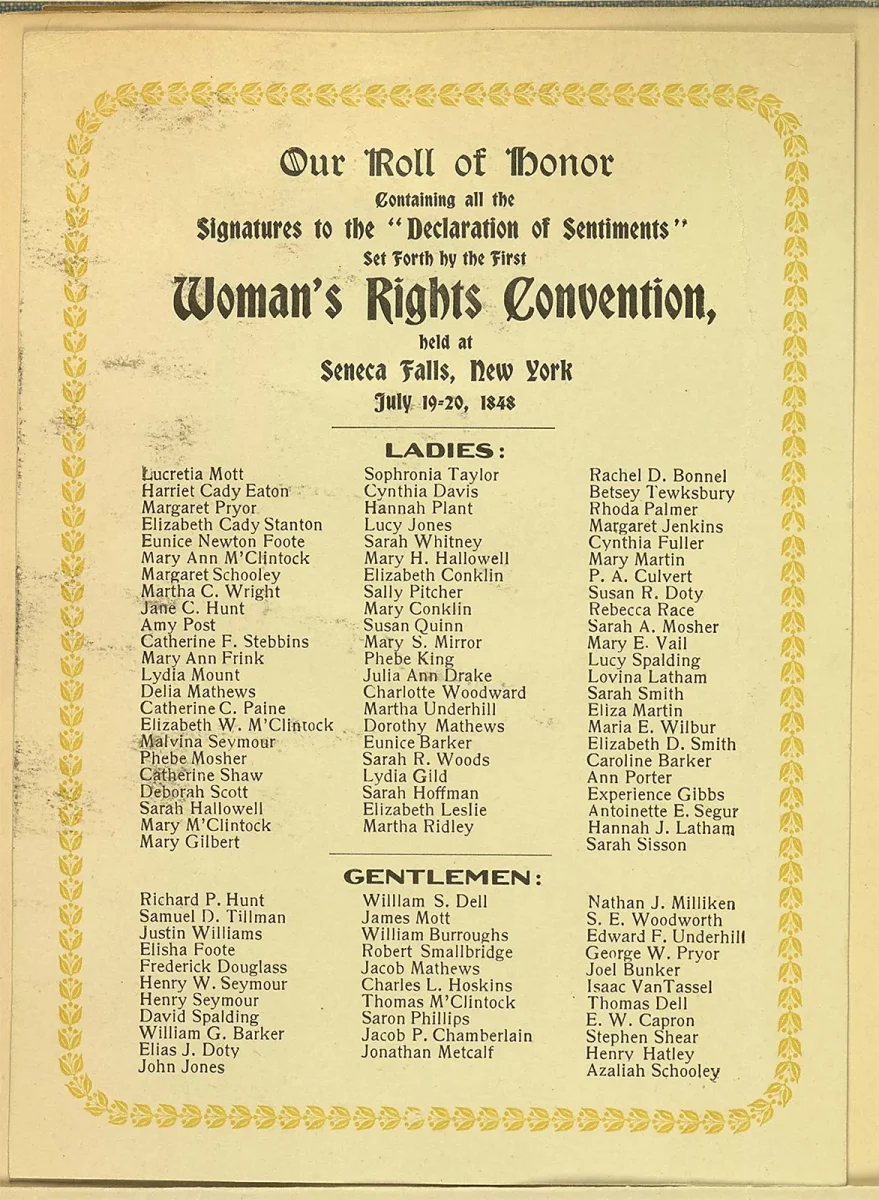
The creation of this document is widely regarded as the birth of feminism, and while it has been nearly 200 years since then, the impact it aimed to create is still being pursued in the form of modern feminist movements. Junior Coralyn Holmberg stresses that the first feminist movements were the crucial predecessor to progress made in women’s equality today.
“[Modern feminism] is so connected to feminist movements that came before us. There wouldn’t be a place or way to advocate for today’s issues if the issues of the past, like women’s suffrage, weren’t solved,” Holmberg said. “A lot of the pivotal people and actions those people took a long time ago to fight for equality are what influenced the grounds that we fight for equality now, even if it’s on a different topic.”
Holmberg’s mother, Elisha Wakefield, witnessed a change in women’s rights movements as she grew up in the 80s and 90s. However, while she was “lucky in that [she] was raised in a household where [she] was very much encouraged to pursue math and science, try new things and pursue new opportunities,” she also realizes that many people still held traditional beliefs.
“Even though my generation involved a shift, where there were women and moms working, a lot still stayed home. There isn’t anything wrong with that, but it was special that we even had the opportunity to ask ourselves what we actually wanted. Did we want to work? Did we want to stay home? Did we want to do both? It was a time when a lot of women were first gaining the opportunity to actually pick that for themselves,” Wakefield said.
One of the primary reasons behind the changing forms of feminism throughout history is that the issues feminism is intended to combat have also changed. According to the National Women’s History Museum, the first wave of feminism revolved largely around the suffrage movement, or giving women the right to vote. Today, the feminist fight for equal rights can look like addressing issues such as the wage gap between men and women, reproductive rights and reversing internalized misogyny in society. When Wakefield was growing up, one of the things she noticed most were the efforts to combat long-standing expectations that reflected a more traditional mindset, but that were still being placed upon girls and women in her generation.
“Even after so much progress had been made, one of the biggest recurring ideas was that girls had to find a husband, and that it was a necessity. People saying things like ‘yeah, you’re educated, but do you have a husband yet?’ was still so common, there was still this idea that you’re not complete until you’ve done that,” Wakefield said. “So a lot of feminist ideas being spread in that time were about trying to reverse that mindset that a girl didn’t have worth unless she was married.”
A recent study found that today, 90% of girls report sexual harassment, 52% report academic sexism and 76% report athletic sexism at least once in their high school years. Furthermore, a 2020 study revealed that around 96% of women reported at least one instance of gender harassment during high school. Senior Skye Duong speaks on the ways in which she notices misogyny in her everyday life, and her opinion on the necessity of feminism in modern times.
“To me, feminism means people understanding that women should be on equal footing with men and have equal rights and privileges. I think it can also mean, from a woman to another woman, doing small acts to uplift each other and support each other,” Duong said. “I’ve definitely noticed [blatant sexism] in my AP Physics class. I’m one of the only girls, and I’ve heard so many guys in that class say that girls can’t do physics or can’t solve specific problems. I’ve even had partners who get sort of standoffish if me or the other girl in my group solve a problem before them. So I think it’s really important that girls in high school embrace feminism to counter behavior like that.”
For Holmberg, feminism today means “making sure the people who haven’t been heard get to be heard.” For her, because of the long history of women being marginalized, feminism is a crucial movement to give women that voice and the rights they have not had. Even today, many of the battles that feminists have been fighting for decades still remain.
“There’s still a fight to be had in the wage gap, and the expectations that come with being a woman. Even after so much progress has been made in other ways, there are still people telling you ‘this is what you’re meant to be, and this is what you can and can’t do,’” Holmberg said.
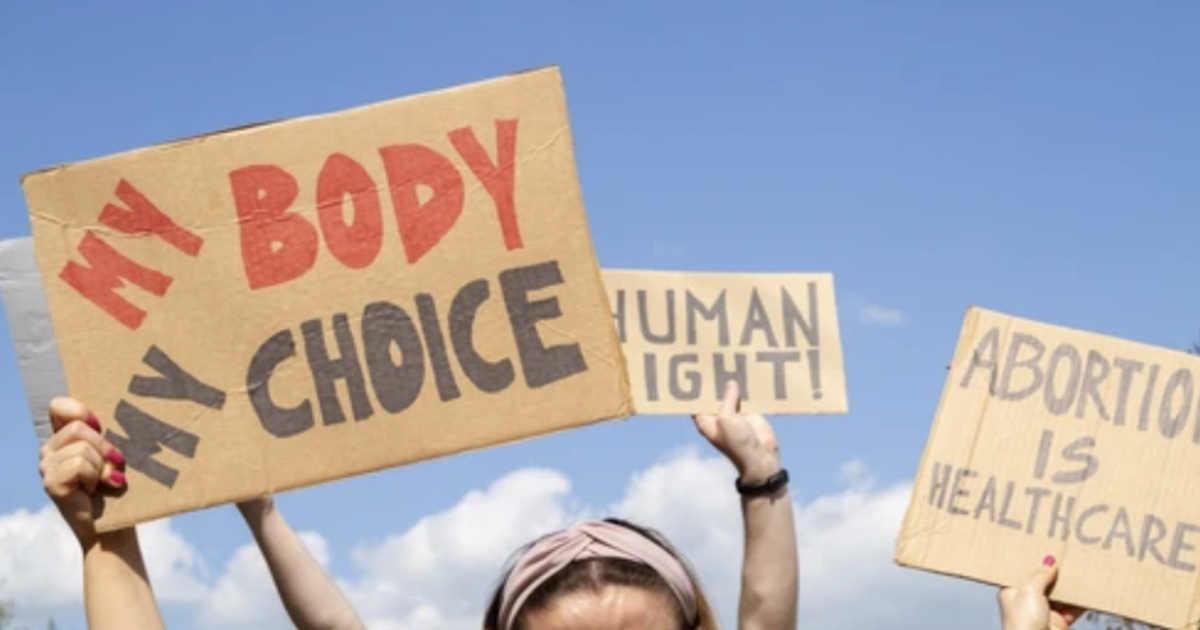
Feminism in the 21st century has taken on many different forms, including advocacy for women’s reproductive rights, which increased greatly after the Supreme Court ruled to overturn Roe V. Wade in 2022. This decision has faced great controversy in recent years, as it involved ending the federal constitutional right to abortion in the United States, which had been protected since the Roe ruling in 1973. Another 21st century example of feminism is the “MeToo” movement, which aimed to “empower those who have been sexually assaulted through empathy, solidarity and strength in numbers,” according to the Global Fund for Women. Meant to demonstrate the widespread prevalence of sexual harassment and assault, “MeToo” involved survivors, led by the voices of women, sharing their experiences of sexual abuse or sexual harassment.
“Even though women are fighting for different rights than we were before, it honestly feels like there’s this sense of urgency there. Seeing people at rallies and protests, and banding together like they did in the MeToo movement to make change, and the controversy over Roe v. Wade being overturned, creates this sense of togetherness and the feeling that we all need to be fighting together towards that common goal. There are so many things going on right now that will affect women, but women themselves aren’t even being included in a lot of the talk,” Duong said.
Women’s activism in modern times has also undergone change because of social media and its use as an outlet to spread perspectives on feminism that do not align with its textbook definition. According to the Oxford English Dictionary, that definition is “the advocacy of equality of the sexes and the establishment of the political, social, and economic rights of the female sex.” This does not suggest that women are superior to men, nor that all women must now change their lifestyle to live and work outside of the home. However, it is not uncommon to see social media posts of people claiming that feminism’s goal is to paint a “housewife” or “stay-at-home-mom” lifestyle as unfulfilling. This comes from a misunderstanding of what feminism is; it does not aim to force work on women, but rather to give them the opportunity to live a life other than the one forced upon them by the patriarchy. It is about giving women the opportunities they have lacked for centuries and allowing them to choose their lifestyle.
“I feel like social media has changed how feminism looks and the way people see it, because it also isn’t an anti-man movement. It isn’t about saying that women are better, it’s just about giving them equal rights that they didn’t have for so long,” Duong said. “Social media has also twisted the narrative to say that to be feminist is to be feminine, and that you have to fit within those borders. I also see videos and comments all the time of girls making comments towards guys that are meant as a dig, but revolve around something stereotypically ‘girly’. Like telling a guy you like his perfume, instead of saying cologne. It makes you think about why giving something typically female attributes is sort of offensive and demasculinizing a lot of the time.”
Though progress has been made – a Pew Research study revealed that the majority of women in the United States feel as though feminism has had a positive impact on their lives – the same study showed that a majority of Americans also say the country “has not gone far enough in giving women equal rights with men.”
“There are a lot of issues that remain that feminism needs to work to resolve now and in the future. One that I feel like doesn’t get as much attention as it should is maternity care. The system of most women only getting six to 12 weeks off, or having to use personal days off when they’ve just had a child, is honestly mind-blowing. These women aren’t getting the support they need when they have to give it to someone else,” Holmberg said. “Also, with reproductive rights, it feels like there’s been no progress. If anything, it feels like we’re going backwards, especially with the overturning of Roe v. Wade. It is so important that feminist battles continue being fought. Women are people, and for too long in history we were treated like we weren’t. That can’t continue.”
When people think of American high school, they think football games, lockers, prom dates and cheerleaders. An often-unacknowledged yet equally prevalent part of the high school experience, unfortunately, is sexism.
Jane, an anonymous sophomore, believes this idyllic Hollywood-encouraged ideal of what high school looks like can be harmful because students feel they need to live up to long-standing stereotypes. In some cases, it reinforces some cliches seen in culture for generations.
“The Powder Puff game is coming up,” Jane said. “It’s saying, ‘This is so funny because the girls are going to play football. Oh my God, how could they do that? They can’t do that because they’re cheerleaders!’ There are a lot of social undertones behind that. It’s important to have fun. But there are [people] who want to have fun, and those who are using that to objectify women and the men who are participating in these [activities].”
Jane experienced being called derogatory sexist terms from her peers when she began attending the school, such as “bimbo,” and “dumb blonde.” These remarks were masked as jokes, meant to minimize their harm.
“For a while, I would [accept] [the name calling] and consume the role because I thought it would make people like me more,” Jane said. “Going into a new school and being presented with [offensive] titles and terms, I thought, ‘This is the way I am going to have attention and get people to respect me.’ But it is not who I am, and I think it is very uncalled for when I am referred to by people I barely know.”
Other female students have felt pressure to tolerate misogynistic behavior towards them due to society’s understanding of gender inequality and the way women feel their hardships will be perceived. Jessica Winter, an editor and staff writer for The New Yorker, recently wrote the viral essay “What Did Men Do To Deserve This?” In the story, she discusses the “masculinity in crisis” narrative and its implicit misogyny.
“What these pundits are nudging us to do, ever so politely, is accept that women, in the main, are accustomed to being a little degraded, a little underpaid and ignored and dampened in their ambitions, in ways that men are not and never will be,” Winter wrote in her article.
Winter takes this a step further when talking about the effects that these standards have on teenagers, particularly in high schools.
“Schools are structurally biased towards boys because of testosterone levels and because the prefrontal cortex develops differently in boys. [Women] just have to deal with it. We just have to face reality as it is. And to me, that reverses course and brings us back to this place where boys will be boys and girls just have to deal. That worries me,” Winter said.
The notion that women must internalize their struggles is all too common. An anonymous senior Stacy was sexually assaulted at age 15. She was given multiple unwanted kisses by a 28-year-old taxi driver and felt as though, despite her extremely supportive family, she couldn’t speak out about her experience.
“I was scared that if I told people what happened to me, I would be asked ‘What did you do?’ or ‘Why were you sitting in the front seat?’ or told that it was my fault,” Stacy said. “I had nightmares that no one would believe me and that I would be isolated from my friends and family.”
Stacy goes on to say this is nothing new to her and her friends. Being sexualized is something she has had to tolerate since she was young.
“Adults thinking that they have the authority to do whatever they want with girls is a lack of understanding and not seeing women as people,” Stacy said. “I have gotten cat-called since I was 12, and it is very dehumanizing. They think that they own you.”
Modern society is normalizing misogyny more and more only in more nuanced ways. While it may seem quiet, the pain it causes is louder than ever, according to Winter.
“The implicit message of it is one of subtlety. It’s one where men are still above women on the social hierarchy, just not as much as before,” Winter said.
Many women still internalize the harmful actions that they are victim to. Stacy believes that if she had not talked about her encounter with other survivors, she would feel much more isolated and continue feeling self-blame.
“It is important to share my story,” Stacy said. “Similar experiences have happened to a lot of my friends, and we’ve had similar conversations. I wish we didn’t have these conversations and that we don’t relate in this way, but it is important to speak out so that other people don’t feel like they have to shy away. I’m glad that I spoke out about it because when I talked about my experience, other people would come out and say, ‘Something similar happened to me.”