
Because I watched this movie, I have been changed for good. Following the successful part one film, “Wicked,” director Jon M. Chu fulfilled my high expectations with “Wicked: For Good,” effectively ending this beautifully compelling story.
The previous movie closed with Elphaba (Cynthia Erivo) flying away on her broomstick after exposing the Wizard (Jeff Goldblum) as a fraud while Glinda (Ariana Grande) decides to stay within the facade of the Emerald City, ending with a “to be continued.” Opening with a scene set a year later, the second installment begins with the construction of the yellow brick road, and thus we learn that Elphaba is known as the Wicked Witch of the West, ingrained into the minds of all Ozians through the spread of propaganda. Glinda is a public figure combating Elphaba’s wickedness with curated goodness. Throughout the movie, they both navigate through the consequences of their decisions in the first film.
Immediately, I was impressed by the computer-generated imagery (CGI) utilized to bring the Emerald City to life, vivify the animals and tinman and give Elphaba her powers to fly. The emotions and movements of the animals were remarkably highlighted during the original song “No Place Like Home,” sung by Erivo. Erivo’s vocals were stunning in this song and throughout the whole film, and there were also strong performances by Grande and Jonathan Bailey (Fiyero). I knew that Bailey could sing because of the previous movie, but in Fiyero’s duet with Elphaba, “As Long As You’re Mine,” I was blown away by the passion and strength behind his high notes. In Glinda’s solo original song, “Girl in the Bubble,” Grande reached operatic levels of singing while simultaneously conveying the complexities of her character.
Unfortunately, the cast in its entirety could not reach the same standards as the leading characters. Madame Morrible (Michelle Yeoh), in all the secondary vocals she had, sounded slightly stiff and lacked feeling, and Goldblum’s singing style in “Wonderful,” featuring Erivo and Grande, was pleasant enough but highlighted the discrepancy between their vocal skills. It was also during this time in the middle of the movie where I began feeling impatient. While it is difficult to point out scenes I think could be cut, the storytelling dragged a bit when revisiting Nessarose (Marissa Bode) as the new governor of Munchkinland or Glinda and Fiyero’s fiasco of a wedding. The story arc just did not reach the same levels as the former movie, but after “No Good Deed,” the slump was over and the action picked up again, staying until the end of the film.
“No Good Deed,” formidably delivered by Erivo, was visually amazing, something that was carried throughout the whole film. “Wonderful” felt perfectly magical and free, and I especially appreciated the shot of Elphaba and Glinda sitting together and dancing, referencing the Ozdust ballroom scene in the first movie.
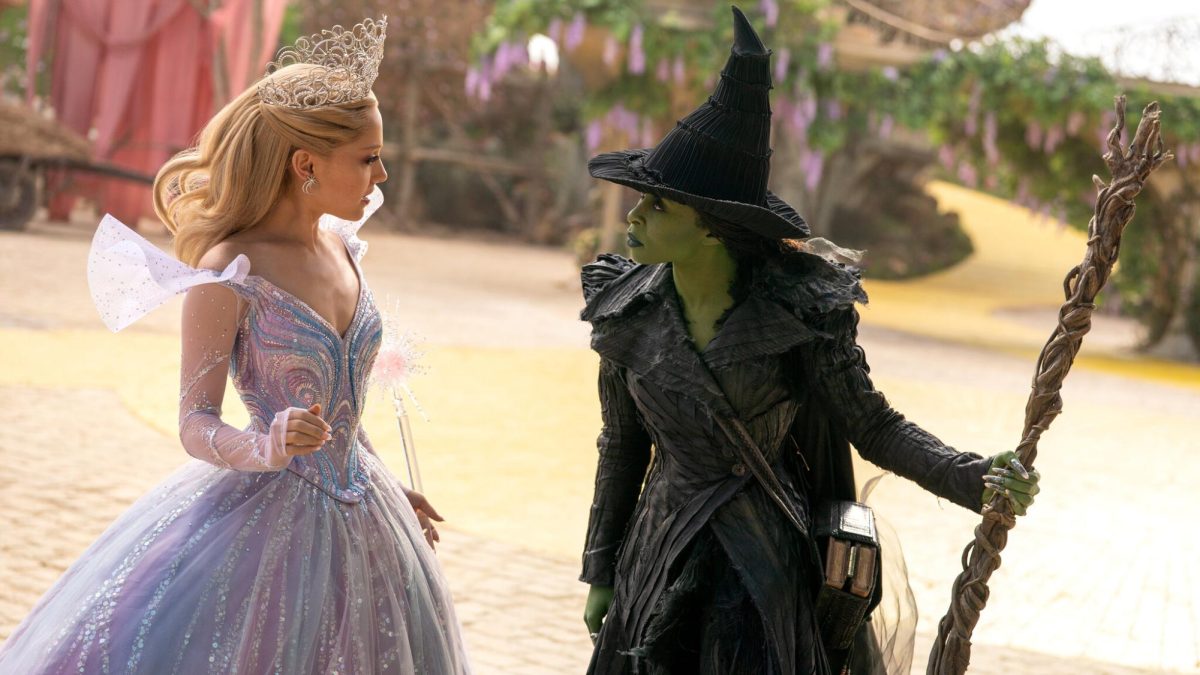
The colors throughout were beautiful; there was never a moment of dullness. Elphaba’s green skin was always lit in a way that complimented and added to the different settings and scenes. The costuming, which earned costume designer Paul Tazewell an Oscar for the previous film, again was effective in transporting the viewers into the fairytale land. However, this movie featured many less outfit changes for Glinda compared to the first, leaving out many looks that were included on promotional videos and posters, which was a slight disappointment. Still, I appreciated the asymmetrical cuts, textured fabrics and especially the respective outfits of the leading characters.
The final song, “For Good,” which had a 360 degree shot around Glinda and Elphaba, was a beautiful yet bittersweet way to sum up their complicated yet cherished friendship. The moments leading up to the song and the moments after would make fans of the original Broadway production proud, and the palpable chemistry of Erivo and Grande made a tearful audience.
I’ve heard people describing the plot to be childish and superficial, but experiencing the story now at an older age, I noticed many profound and deep themes present in the movie. In “No Place Like Home,” Elphaba is facing and fighting for a place that constantly rejects and refuses her. Through the propaganda that painted Elphaba as wicked, the questioning of the nature of truth and the power and influence of mob mentality is compelling. The actions and blame-shifting of Madame Morrible and Nessarose begs the questions: who is truly wicked and what really constitutes evilness? In “Girl in a Bubble,” Glinda must reckon with the reality that has been seeping through the cracks of the seemingly perfect Emerald City and bear the burden of knowing the truth. And the titular song, “For Good,” signifies how the people, the things and the lives we lead can bring lasting, improving change for an individual and everyone.
This film is most definitely worth a watch — after watching the first one — because there is a story element that speaks to everyone. Whether it’s Elphaba’s finding power in her alienation or Glinda’s desire for love and attention, there are human experiences that transcend the limits of fiction through the audience’s ability to identify with them.