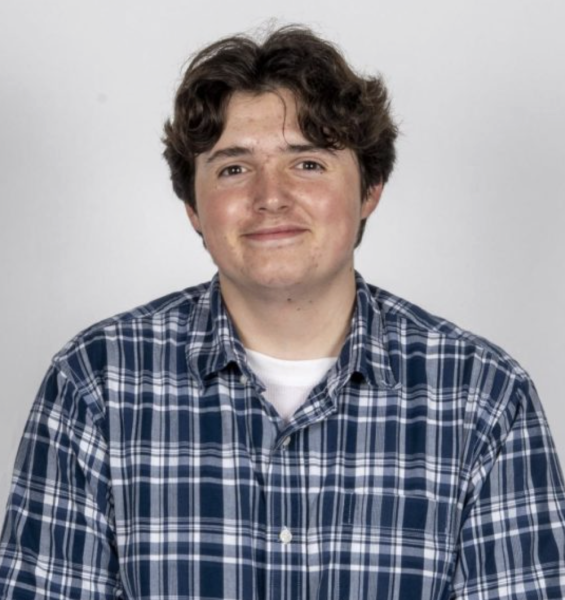
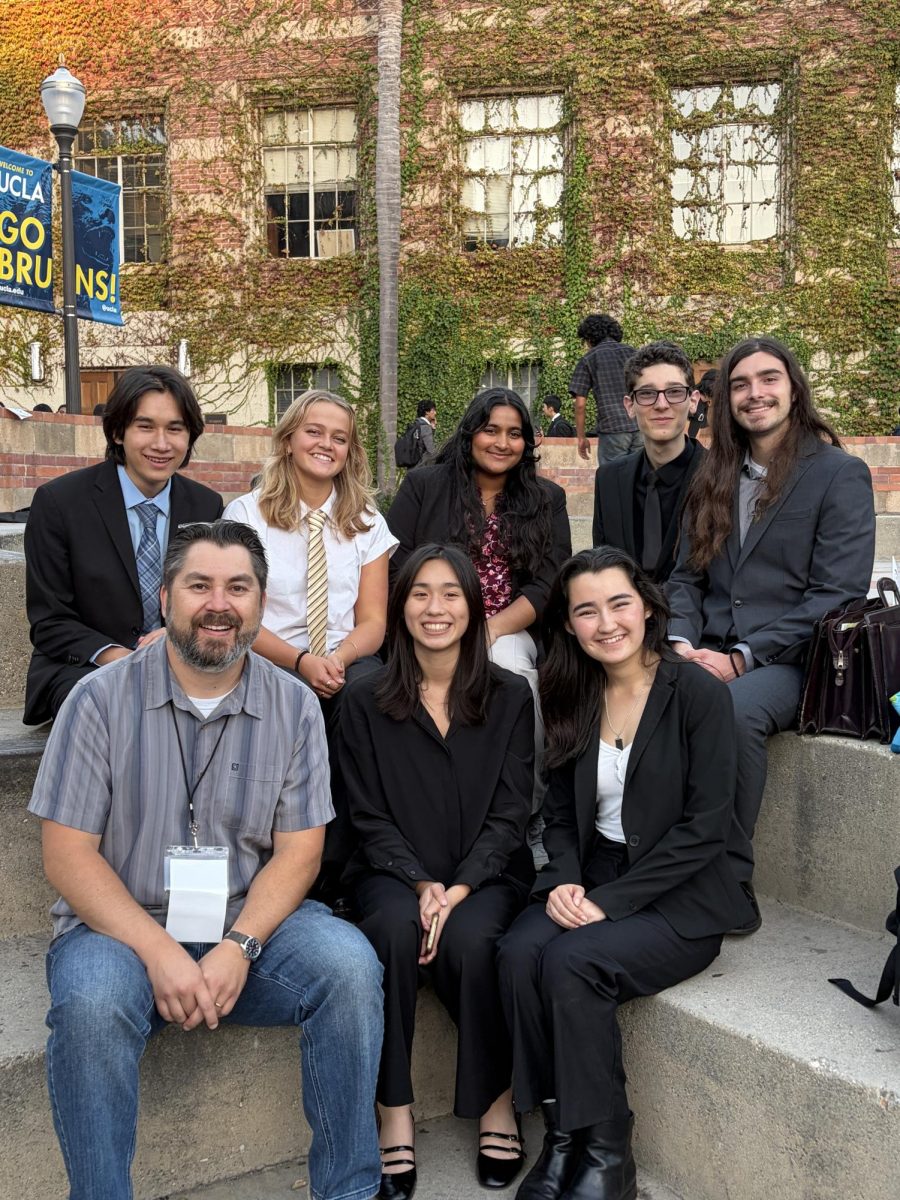
Described as one of the largest conferences of the year by senior Chloe Donovan, students in Model United Nations (MUN) attended the Bruin MUN conference on Nov. 8 and 9, with several colleges across Southern California. The conference, held at the University of California Los Angeles (UCLA) campus in Westwood, proved to be one of RUHS’ biggest conferences they plan to attend for the entirety of the year. According to Donovan, the President of Model UN, the most noteworthy part of this conference is how it incorporates cross-state high school and college-aged student bodies. These collections of students meet at the college campus to debate global issues that involve the UN and other committees. Sophomore Hannah Shaaban, a Model UN delegate, described the experience and how the conference’s location at UCLA impacted its significance.
“What’s super special is that instead of being at a high school, it’s at a college, so many other schools are going [to]. It’s an insane production: instead of being in a room with thirty people, now you’re in a huge room with sixty people with college students being your chairs. That’s really special because it’s a lot harder, but it’s a lot more fun,” Shaaban said.
According to Shaaban, conferences like BruinMUN foster growth for students — preparing them for public speaking positions, increasing confidence, improving writing skills through position papers and strengthening debate skills. Donovan, too, described her excitement for the conference, finding it to be special because the debate incorporates multiple perspectives from different kinds of people, who all have the opportunity to share their different ideas on how to reach global resolution. For both Shaaban, Donovan and other Model UN delegates, all of these factors make the conference feel especially important in contrast with others.
The conference’s vast, diverse collection of students means there are higher stakes and debates between delegates take on a greater level of significance which, accordingly, means there is a need for extra preparation. To be fully prepared for the two-day long conference, during which they spent debating and publicly speaking, students had to prepare extensively.
“The biggest thing is research. A mistake a lot of people make, especially in the beginning of their Model UN career, is not understanding what the topic is or what your committee, your branch, of the UN’s power is,” Donovan said. According to Donovan, knowing the limitations of one’s committees is also important to be prepare. Students also had to write position papers in preparation for the conference where they were asked to write essays based on the historical background of their topics. Students discussed the UN and other organizations’ involvement in these issues and then formed and discussed solutions which would later be presented to other delegates.
“It’s basically like writing an essay outside of school. It’s a lot more work, but every time I learn how to become a better writer from what I have to research, what I have to do and then how I can apply that,” Shaaban said.
According to Shaaban, after Model UN delegates do the appropriate research and gain a greater level of understanding on their topic, it gives them a more diversified perspective on the world, and how the UN and other committees work to solve the problems that plague it.
“Politics and debating with other people is one of my favorite things, and when I get to go there, I get to learn so many new things about the world. It allows me to just think about and realize how much change our world needs, and it also helps me realize how much we’re actually doing to help,” Shaaban said.
Her topic explored Samoa’s time change, which occurred in 2011 when they were originally aligned with American Samoa’s time zone.
“[We discussed] preserving cultural ties with indigenous people as well as my other topic, building infrastructure and technology and developing that to make sure that Samoa has a fair ability to trade with their partners as well as keep their culture,” Shaaban said. After the in-depth research she did, Shaaban felt very rewarded afterward as she often does with each conference. This time, she felt the topic gave her a new outlook on the world as it pertains to the country of Samoa, and the UN’s connection to it whilst simultaneously strengthening her skills in the program.
As a general consensus afterward, Donovan described the conference as a great experience that was “very funny,” mentioning moments where the debate strayed away from its main topics and took a more humorous tone. She expressed her enthusiasm over the several awards won by RUHS delegates: three crisis awards and one general assembly award, also discussing her bittersweet feelings towards the conference.
“It was really fun. Very sad because it’s my last [conference at BruinMUN], but it was great seeing all the different kinds of people. We saw a lot of graduates from the Redondo program, and some of them were even sharing other committees. It was good seeing their perspective on what it looks like when you’re behind the scenes running that kind of collegian or a college conference.” Donovan said. “It was probably the smallest committee I’ve ever been in, only 12 delegations, so 24 people. But it was a good debate. Everyone was very respectful. The topic ended up being very interesting, and the crisis directives and the storyline of the committee was very interesting. It was a great experience. You learn a lot. And I had an amazing time.”