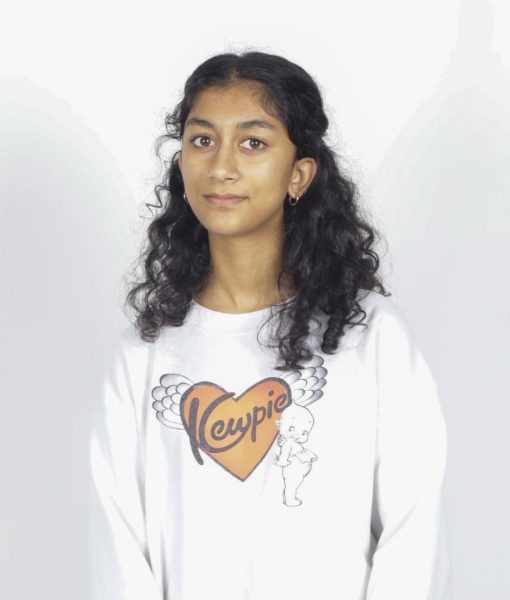
Teachers are often more than they seem. For Claire Haddad, chemistry is only half her story. The other half unfolds in emergency shifts at one of L.A.’s busiest arenas. When she is not guiding students through lab experiments, she is on the sidelines at SoFi Stadium, working as a paramedic amid the chaos of NFL crowds and concerts.
“I was always interested in health sciences [when I was in high school], and when I went to college, I liked biology and chemistry the most out of all the other subjects,” Haddad said. “I feel like I do a lot of biology when I am working as a paramedic.”
Haddad is an RUHS alumni and graduated in 2019. As a freshman in Honors Biology and a senior in AP Biology, Haddad’s favorite teacher was Holly Frame. Haddad always loved her class and learning about life and natural sciences.
“As a student and even now, [Haddad] is super mature, a level of maturity beyond her peers that made her easily stand out in the classroom,” Frame said. “I noticed that she was able to connect with others really easily.”
After graduating from university, Haddad worked in biotech for a year, but she quickly realized that it was not the right fit for her. The decision to move from biotech pushed her toward emergency medicine and working as a paramedic.
“When I realized biotech was not something I wanted to pursue, I decided to go to EMT [Emergency Medical Technician] school instead. I learn a lot of biology and life science from being an EMT, so I really enjoy teaching chemistry,” Haddad said.
During the school week, Haddad teaches in room 121 as Nicole Bertuccio’s temporary substitute. However, on the weekends, Haddad works 10 to 12-hour shifts. She clocks in at six in the morning and does not leave until around four in the afternoon.
“SoFi has its own hospital in the stadium. When we get there, we check over all of our equipment, and we station ourselves around SoFi,” Haddad said. “Then we go to our post and we just wait for people to need help.”
Balancing two very high-stakes jobs throughout the week can be very challenging and stressful, especially if one of your jobs involves making split-second and quick decisions that could easily and directly impact someone’s health.
“At my first job at the stadium, I was not calm, especially under pressure. I was really nervous and jittery… My first shift was actually with a mother and her kids, so I was freaking out, because their lives were my responsibility, but I eventually got used to the pressure,” Haddad said.
Although Haddad sometimes struggles with switching between the intensity of the stadium and the patience of a teacher required in a classroom, she says both jobs are similar. They constantly teach her new skills that she can implement in her day-to-day life, and can sometimes overlap.
“When I started working as an EMT, I actually started to understand the concepts that I teach in chemistry, like significant figures,” Haddad said. “I use chemistry all the time at the job, like if I am trying to make sure if someone has taken their medication, and if you give them medication, that it does not interact with their systems. That is all based on chemistry.”
Haddad’s unique background makes her stand out as a teacher, especially to students who might not always see the real-world applications of science. Unlike many first-year teachers, Haddad is able to draw on both academic knowledge and hands-on medical experience.
“She was always hardworking and an especially strong student. Now, she can bring in real-world knowledge when she is teaching chemistry, whether that is from her college classes or her experiences working on the fly with a medical procedure,” Frame said.
Though the work can be stressful, Haddad says the best part of being a paramedic is seeing the immediate difference she can make. Whether she is helping someone recover quickly enough to return to their seat or ensuring they get the care they need beyond the stadium, those moments remind her why she chose the job and why she continues it even now.
“We work on the floor, so the people who paid for expensive tickets usually get really upset when we tell them that they have to leave,” Haddad said. “So, the cases where we can fix them up and send them back out is really rewarding for us.”