
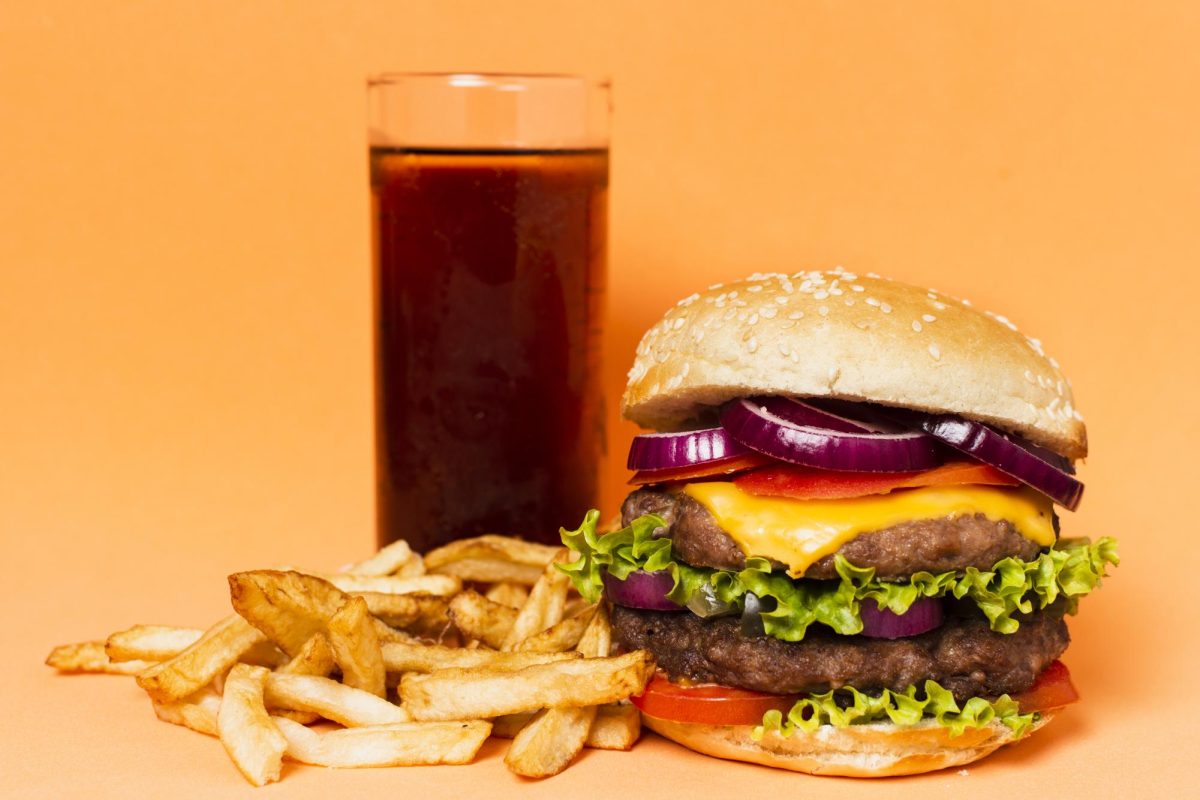
Convenience is the driving force of consumer culture in the modern world. Easy access enables overspending. For students at RUHS, convenient places to deposit massive amounts of cash take the form of Starbucks and McDonald’s across the street. Only a few minutes away on foot, these franchises capitalize on their location, next to hungry, sleep-deprived teenagers.
Every morning, there is a horde of RUHS students congregating around the counter at Starbucks, and every weekday afternoon after the bell rings, another large crowd assembles at McDonald’s. Clamoring for coffee and heavily processed fast food, RUHS students fall victim to a corporate ploy.
According to Brennan Davis and Christopher Carpenter from the National Library of Medicine, “students with fast food restaurants near (within one half mile of) their schools” were more likely to eat less healthy foods like fruits and vegetables and “were more likely to be overweight.”
Indulging in these items every once in a while isn’t an issue, but constantly gravitating towards high-calorie, low-nutrient foods does take a toll on students’ physical well-being. Physical health is of the utmost importance during the teenage years when our brains and bodies are still developing.
Higher calorie intake isn’t even the only issue at hand; increased caffeine intake among RUHS students as a direct result of the presence of a Starbucks across the street is another concerning and undeniable truth.
According to Steven M. Kogan et. al. from the Journal of Adolescent Health, caffeine is the most widely consumed psychoactive drug in the United States — a stimulant that arouses bodily symptoms and results in physical dependency.
Withdrawal symptoms — headaches, fatigue, daytime sleepiness, mood disturbances, and concentration difficulties – worsen as tolerance increases, meaning that more regular caffeine consumption can have devastating effects on students’ sleep patterns and cognitive functioning.
Students grabbing coffee from down the road each morning before class likely don’t realize that their habits are unsustainable. As an avid coffee drinker myself, I do admit that the Starbucks baristas across the street know my name. I am a frequent customer and, thus, also a sufferer from all the above symptoms. It’s not a lifestyle I would recommend to anyone, especially financially speaking. Starbucks is expensive.
In fact, financial author David Bach has even named the practice of small, daily expenses eroding long-term wealth and savings the “Starbucks Effect,” an ode to the startling accumulation of expenses that result from frequently purchasing a seemingly harmless coffee multiple times a week. If the average person spends about 5 dollars on their Starbucks drink of choice 4 times a week, they spend approximately one thousand and forty dollars a year on beverages alone. That’s a lot of money.
So what’s the solution? Obviously, we can’t put limits on the amount of fast food or coffee students can purchase, nor can we politely ask Starbucks and McDonald’s to forfeit their successful business franchises and move to the other side of town. The only thing we can do as students to engage in more healthy and conscious lifestyle choices is to increase our awareness surrounding our individual eating habits.
Real personal reflection is the last line of defense against our own self-sabotaging behaviors.